
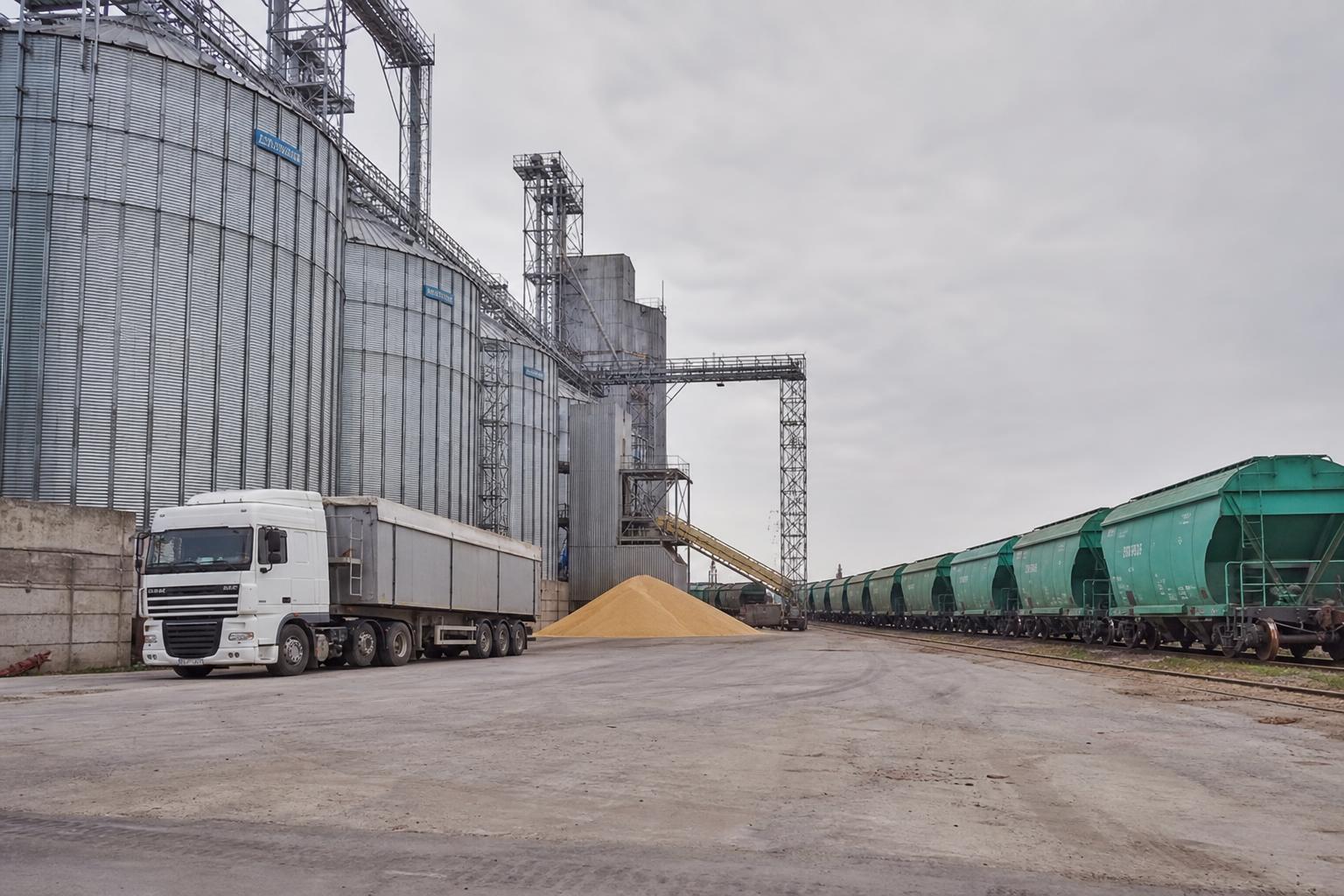
Ukrainian agricultural logistics remains one of the main factors influencing prices for grains and oilseeds. Even with available domestic supply, the final price increasingly depends on routes, transport accessibility, port operations, and the ability of elevators to fulfill commitments.
The most pressure is currently on sunflower, grain, and processing product sellers. The market has the physical resources but does not always have sufficient throughput to quickly deliver them to buyers or export channels.
Sunflower: Larger harvests do not eliminate logistical constraints
In 2026, Ukraine is expected to harvest the largest sunflower crop in three years — 13.5–13.6 million tons. This is 26% more than in 2025. Processing capacity is also estimated higher — 13–13.3 million tons, or 29% more than last season.
However, a larger harvest alone does not guarantee increased processing. Analysts point to the practically blocked operation of deep-water ports, high load on alternative routes, and a shortage of land transport.
For processors, this means a more complex economy: they need not only to purchase raw materials but also to maintain a stable export channel for oil and meal. Market estimates suggest that even with full utilization of alternative routes and partial use of Odessa ports, a rapid export recovery to 300–400 thousand tons per month is currently not expected.
Export routes: competition for buyers intensifies
Limited operation of Black Sea logistics affects not only the domestic market but also Ukraine’s position in global trade. Market assessments indicate a risk that, if port restrictions persist, the global market could miss out on up to 38 million tons of grains from the Black Sea region by the end of the 2026/27 season.
Against this backdrop, buyers are seeking alternative supply sources. For example, Argentina is increasing its presence in the corn market: in August–September, exports reached a record 10 million tons, as some buyers redirected their purchases due to reduced Ukrainian supplies caused by military actions in the Black Sea.
An additional competitive factor is the expected high production in South America. For Argentina, the 2026/27 season forecasts include 53.6 million tons of soybeans and 66 million tons of corn. While this does not automatically replace Ukrainian products, it heightens buyer demands regarding delivery timelines, logistics quality, and contract predictability.
Land transport and alternative channels become margin factors
For Ukrainian sellers, logistics capacity essentially determines whether a deal is profitable. Regions with access to favorable land routes, operational elevator infrastructure, and buyers ready to pick up goods within agreed timelines have the best opportunities.
In the sunflower segment, this already influences market participant behavior. Processor demand for the new harvest remains subdued, prices are being revised downward, and processing start-up is considered one of the weakest in recent years. Meanwhile, seed exports can serve as an alternative for sellers, mainly where logistics allow maintaining supply economics.
- For sellers: proposals should immediately specify basis, available transport, distance to the elevator or loading point.
- For buyers: it is important to verify not only the price but also the actual possibility of shipment within the required period.
- For traders: competition is not only for the product but also for routes, wagons, trucks, and transshipment points.
Elevator risks: storage is also part of logistics
Problems with elevator infrastructure add another layer of risk to the market. In the case of Volytsia-Agro, reports in spring 2026 indicated the disappearance of about 130–140 thousand tons of grain from the elevator, belonging to depositors. Subsequently, Sense Bank recognized the borrower’s default.
This case is not a typical logistical delay but serves as a reminder to market participants: storage, documentation, inventory control, and elevator reputation directly impact product safety. For farmers or traders, an elevator is not just a storage site but a critical link in fulfilling contracts.
At AgroPost, this emphasizes the importance of transparent conditions in advertisements: who is responsible for delivery, where the product is stored, whether self-pickup is possible, what documentation is required, and the deadlines for shipment.
What this means for the market: in the 2026/27 season, prices for grains and oilseeds in Ukraine will increasingly depend on logistics rather than just harvest volumes. Sellers should consider deals from the final delivery point, while buyers need to book transport and verify the elevator chain before signing contracts.
Comments
No comments yetNo comments yet - be the first.