
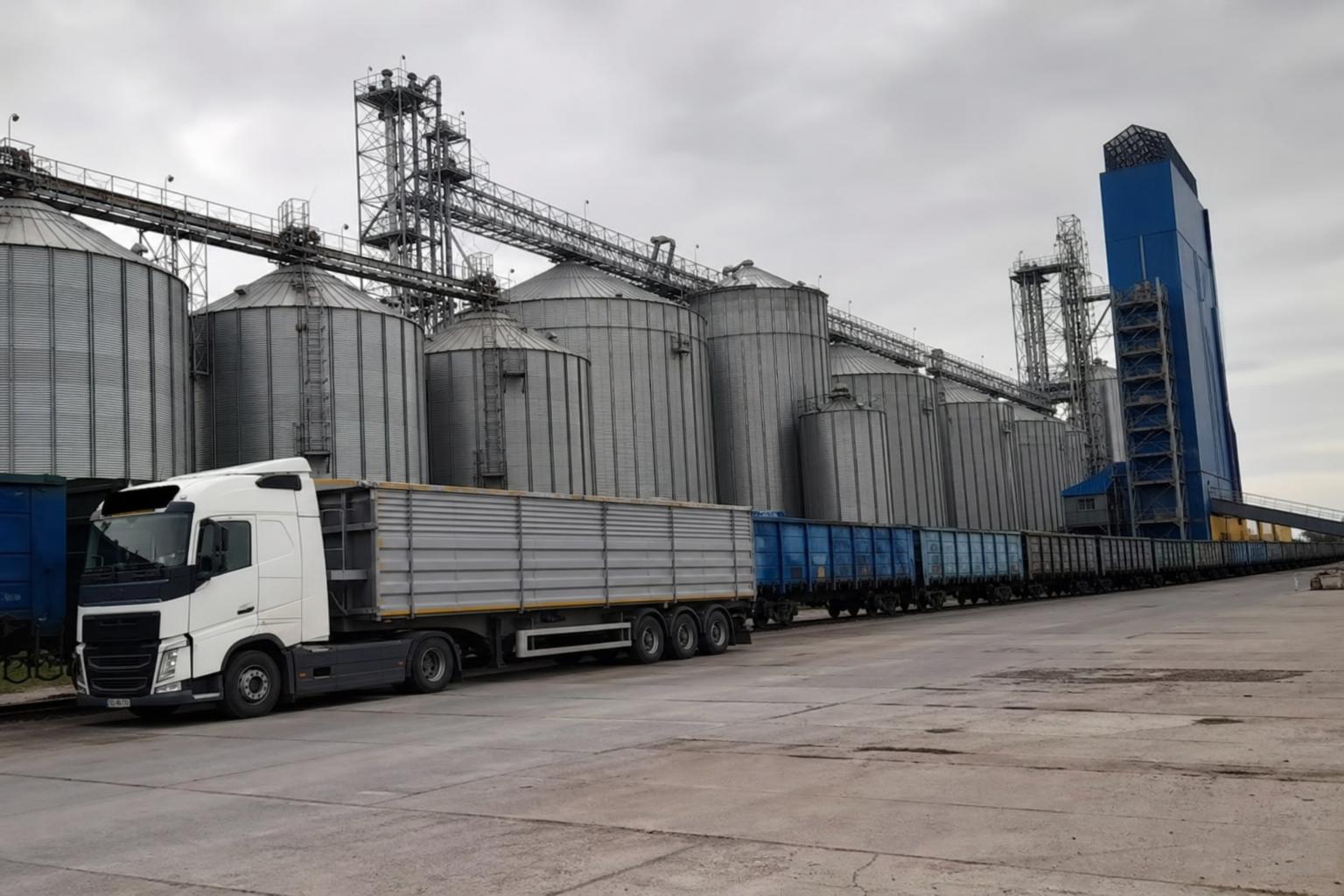
Ukrainian agricultural logistics once again faces a narrow seasonal window. During the active export period of the harvest, neighboring countries have little free capacity for additional Ukrainian volumes.
For grain sellers, traders, and carriers, this means a straightforward market reality: routes need to be booked earlier, and commercial offers should account for queues, wagon availability, road transport, and port transshipment.
Western crossings: demand exists, but available resources are limited
According to estimates voiced by Minister of Agrarian Policy and Food Taras Vysotsky, transshipment capacities in neighboring countries are currently occupied with their own agricultural products. As of early July, schedules for July-August were already booked, and the first limited opportunities are expected only in September.
The key difference from 2022 is seasonality. Back then, some infrastructure in neighboring countries was less loaded because it was the end of the marketing year. Now, Ukraine is competing for logistical resources during the same period when neighboring countries are actively exporting their own harvests.
The peak load for the region falls on July-October. Therefore, the market does not anticipate a sharp expansion of alternative routes before this period ends.
Romania and Moldova remain the main alternative corridor
The most effective route for Ukrainian agricultural exports among alternatives is Romania. Along with Moldova, this corridor accounts for approximately 70% of relevant transportation, according to estimates.
The Polish route covers roughly 15–20%. The remaining volumes are distributed among other countries. At the same time, routes through Slovakia and Hungary are considered less competitive from an economic perspective.
For businesses, this is important when forming FCA, DAP, or CPT prices: a cheaper route on paper may lose its advantage due to limited capacity, longer waiting times, or higher transshipment costs.
Financial support does not eliminate logistical risks
The European Union did not approve Ukraine’s request for an additional €220 million in grant aid to farmers due to the consequences of attacks on Black Sea ports. Instead, the European Commission points to existing support tools, including interest rate subsidies and credit programs through financial intermediaries.
For the logistics market, this does not change the operational picture: transportation, transshipment, and waiting costs remain a commercial risk for participants in the supply chain. Therefore, sellers on AgroPost should immediately specify in their announcements the desired delivery basis, available shipping directions, and readiness to work with trucks, rail, or combined schemes.
Key conclusions for sellers and buyers
- Do not delay booking. Free slots on western routes are limited, especially during July-October season.
- Compare total logistics costs. Not only the transportation rate matters but also queues, transshipment, delays, and transport availability.
- Separate calculation for the Romanian corridor. Romania along with Moldova remains the most significant alternative for exports.
- Clarify the delivery basis in commercial offers. Clear delivery terms help to find buyers or carriers faster.
What this means for the market: Ukrainian agricultural logistics is entering a period where access to specific routes at specific times becomes decisive, not just the grain price or carrier tariffs. At AgroPost, market participants should make their announcements as practical as possible: crop, volume, loading point, preferred route, delivery basis, and readiness for alternative logistics.
Comments
No comments yetNo comments yet - be the first.