
Ukrainian agricultural logistics is once again operating under heightened risk conditions. For grain sellers, the key issue now is not only price but also which routes are practically accessible for shipment and how quickly the buyer is ready to confirm logistics.
According to market participants, some shipowners have started avoiding Ukrainian ports following intensified attacks on vessels in the Black Sea and port infrastructure in the Odessa region. This is already affecting freight rates, insurance, CPT-based purchases, and demand for alternative export channels.
Maritime Sector: Freight and Insurance as Main Risks
Signals have emerged in the freight market regarding the review of already concluded agreements. Some shipowners, according to brokers, are canceling or reassessing bookings for voyages to Ukrainian ports.
Additional pressure comes from insurance. It is reported that insurance companies have temporarily suspended issuing new war risk policies for vessels and cargo heading to Ukrainian ports and are reviewing premium levels considering the risks.
For agricultural producers, this means that even previously confirmed logistics may require re-approval. For buyers, the cost of delivery may change faster than the product prices on the market.
CPT-Port: Traders Are More Cautious with New Purchases
The worsening conditions in maritime logistics have impacted procurement activity. Market sources indicate that most traders have suspended new grain purchases on CPT-port terms and are reassessing contract fulfillment risks.
Some buyers have already reduced purchase prices for new crop grain by 300 UAH/ton. While this is not necessarily a market-wide benchmark, it signals that logistical risks are quickly reflected in procurement prices.
In such a situation, sellers should carefully compare not only basis and price but also acceptance conditions, transportation deadlines, responsibility for delays, and route flexibility.
Alternative Routes: Growing Significance of Romania, Poland, and Dry Ports
Amid uncertainties at Ukrainian ports, interest in alternative export directions is increasing. In the Black Sea region, buyers may more actively consider Romanian and Bulgarian grain as substitutes if disruptions in Ukrainian supplies persist.
According to brokers, offers for Romanian feed wheat for August deliveries have risen to €216/ton FOB Constanța, approximately equivalent to $247/ton. A week earlier, levels of $228–229/ton FOB Constanța were reported.
This is an important indicator for Ukrainian exporters: competition for buyers increasingly depends on route stability. If port logistics become more expensive or less predictable, the market quickly shifts to other export points.
Container Logistics: Example of Mostyska Dry Port
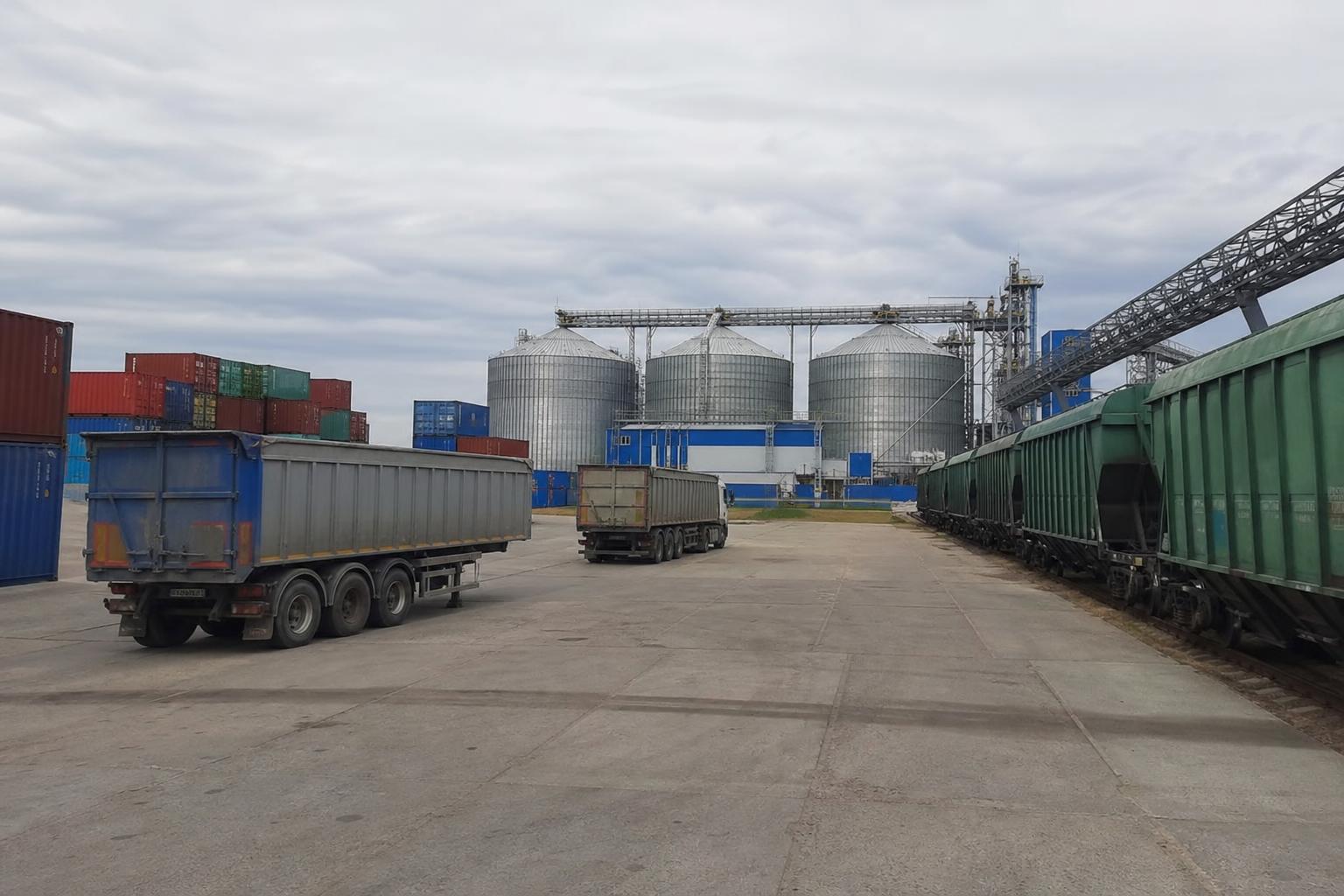
In the western direction, dry ports remain a viable option for agro-export. The "Mostyska Container Terminal" in Lviv region does not plan to expand grain silos but focuses on container infrastructure, covered warehouses, and grain handling.
The terminal's grain complex has silos with a total capacity of 4,000 m³. An initial plan to increase storage capacity to 12,000 m³ was considered but abandoned, as there was no practical need for such an expansion.
The terminal functions as a platform for accumulating railway consignments. One batch typically amounts to 1,600–1,800 tons of grain. Cargo arrives by railcars and trucks, is accumulated over several days, then loaded into European warehouses and dispatched within 12 hours.
On average, the grain complex handles up to 7,000 tons per month, with an estimated annual capacity of 720,000 tons. The terminal processes wheat, corn, rapeseed, soy, and meal.
According to the terminal, 95% of the grain after transshipment is sent by rail to Germany. The remaining portion goes to Poland or is shipped via containers through Gdansk and Gdynia ports for further maritime export.
Key Takeaways for Sellers and Buyers on AgroPost
- Verify the route before signing a deal. For export-bound grain, it is crucial to clarify the port, terminal, availability of freight, or alternative rail options immediately.
- Document logistics conditions in writing. During periods of freight volatility, prices without clear delivery terms can quickly become outdated.
- Compare CPT-port with Western routes. Even if alternative route prices are lower, they may be more advantageous due to predictability.
- For container shipments, consider the availability of covered warehouses. Grain handling requires synchronization of auto delivery, railcars, containers, and dispatch schedules.
Implications for the Market. Logistics factors are once again becoming the main price determinants in agro-export. Sellers should prepare multiple shipment scenarios, while buyers need to confirm delivery channels promptly. For AgroPost, this increases demand for listings with clearly specified basis, available transport, export direction, and readiness for alternative logistics.
Comments
No comments yetNo comments yet - be the first.