
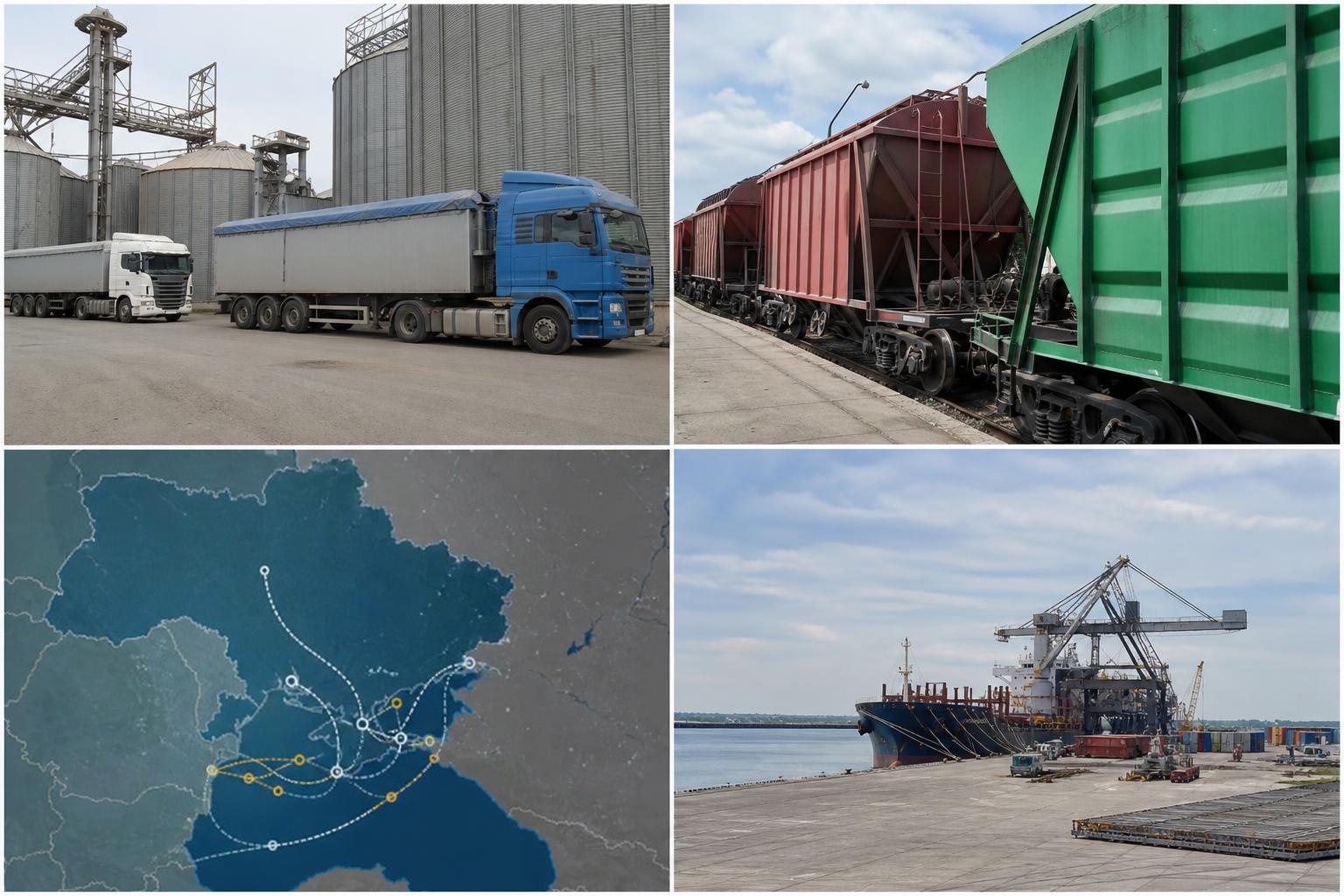
Ukrainian agricultural exports are entering a period of heightened focus on logistics. The market is simultaneously discussing the safety of Black Sea infrastructure, the cost of railway routes, and the economics of delivery to alternative ports.
For grain and oilseed sellers, this means a need for more precise calculation of logistics costs in their pricing. For buyers, it involves more careful verification of delivery basis, shipment timelines, and tariff fluctuation risks.
Black Sea Infrastructure Returns to the Fore
According to Reuters, Ukrainian drones damaged a large grain export terminal at the Taman port on the Kerch Strait. Sources indicate that this terminal has a capacity of 5 million tons of grain.
Separately, Reuters, citing sources in the agricultural market, reported an attack on an oil sunflower export terminal in Taman. One report suggests that the damages were minor.
For the Ukrainian market, the significance lies not in the Russian asset itself but in the signal it sends to the entire Black Sea logistics: port infrastructure in the region remains a risk factor that can affect insurance, vessel schedules, and the behavior of international buyers.
Constanța Remains an Option, but Route Cost Is Critical
Amid security risks, some exporters traditionally consider western and Danube routes, particularly the route to Romanian Constanța. At the same time, the economics of this route depend on railway costs, transshipment, and border queues.
The profile market discusses an estimate from the All-Ukrainian Agrarian Council, which suggests that the cost of delivering a ton of wheat to Constanța after increased tariffs by Ukrzaliznytsia could reach $60–70. Such expenses require a separate margin recalculation for each batch, especially for crops with low domestic market prices.
For small and medium-sized sellers, this means that “elevator price” and “port price” can differ significantly. Buyers should immediately clarify who bears the risk of tariff changes and additional costs during transit.
What to Check in Transportation Agreements
In current conditions, a logistics contract becomes just as important as the product price. This is especially relevant for batches of grain and oilseeds planned for export through multiple transport links.
- Delivery basis. Clearly specify whether it concerns shipment from the farm, elevator, border crossing, or port.
- Tariff and validity period. Clarify whether possible increases in railway or port charges are included.
- Queues and delays. Explicitly assign responsibility for delays of wagons, trucks, or vessel batches.
- Insurance and force majeure. For Black Sea and Danube routes, verify which risks are covered and which remain the responsibility of the seller or buyer.
Key Takeaways for AgroPost Participants
Grain and oilseed sellers should publish proposals with as specific logistical details as possible: region, elevator, available transport, preferred basis, and minimum batch size.
Buyers should compare not only the price per ton but also the total delivery cost to the consumption or export point. During tariff uncertainty, a lower product price does not always mean a cheaper deal.
What this means for the market: Ukraine’s agricultural logistics remains one of the main factors influencing prices. The most competitive deals will be those where parties agree in advance on the route, tariff basis, timelines, and responsibility for delays.
Comments
No comments yetNo comments yet - be the first.