
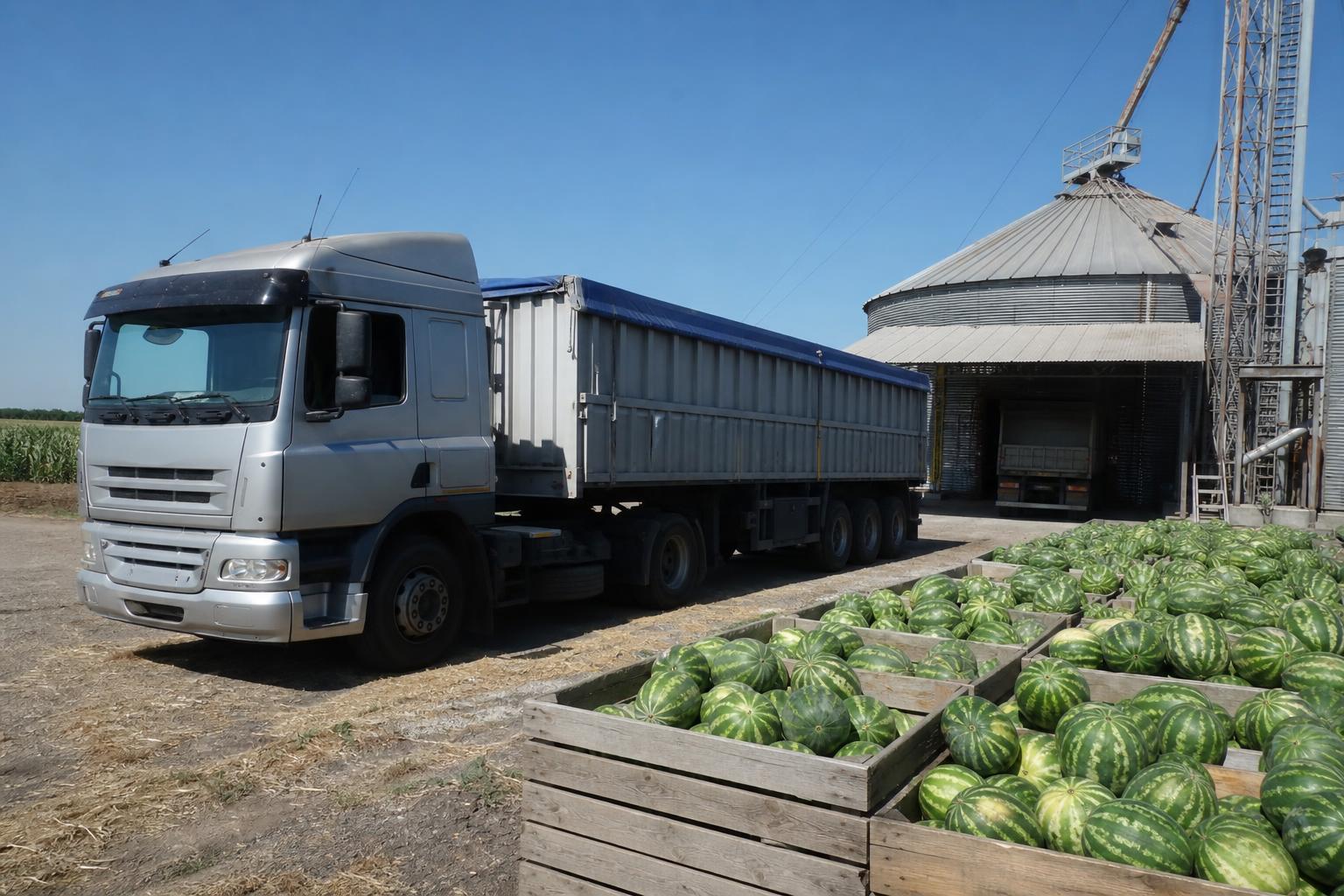
Ukrainian agricultural logistics is entering a busier summer period. The south is already supplying the first batches of melons, western regions are starting to harvest early grains, legumes, and rapeseed, while exporters need to work more carefully with documentation and supply chains.
For carriers, traders, elevators, and buyers on AgroPost, this means increased demand for various types of transport: from urgent delivery of perishable products to planning grain and oilseed shipments to warehouses, processing facilities, and port infrastructure.
The South kicks off the melon season: speed of delivery is crucial
The Odessa region has begun selling the first local watermelons. According to market reports, an agricultural enterprise from Tatarbunary is selling Louisiana variety watermelons, which are fully ripe. Also available are Neo variety melons.
This harvest is classified as early, grown under mulch film. Logistics-wise, such products have specific requirements: melons need rapid removal from the field or farm, careful loading, and coordination of batches with buyers before dispatch.
Practically, sellers should specify the batch volume, loading location, preferred container type, and shipment schedule in their announcements. Buyers should verify ripeness, packaging conditions or bulk transportation, and the readiness of transport for quick dispatch.
Harvesting in Prykarpattia: grain, peas, and rapeseed form the first shipments
Harvesting of early grains, legumes, and rapeseed has started in Ivano-Frankivsk region. The first to begin are farms in Ivano-Frankivsk and Kolomyia districts.
As of July 2, 2023, 500 hectares of winter barley and 100 hectares of peas have been threshed. The total harvest amounted to 2,650 tons of winter barley and 200 tons of peas. Rape harvest has also commenced: on 500 hectares, 1,430 tons have been harvested.
The total rapeseed area in the region this year is 24,600 hectares, an increase of 3,000 hectares compared to last year. The area under grains remained nearly unchanged from 2025.
For the logistics market, this signals the need to prepare grain wagons, dump trucks, temporary storage facilities, and elevator capacities. The first batches typically require precise coordination between combine harvesters, fields, weighing stations, storage, and buyers.
Export logistics: routes and contractors under increased scrutiny
A separate risk factor for agricultural logistics relates to export operations. Public discussions are ongoing regarding allegations of possible Ukrainian grain supplies to Iran through intermediary structures. Moldovan group Trans-Oil has stated that it rejects accusations against its founder and has engaged an international legal firm to clarify the circumstances.
Public sources also mention that Trans-Oil operates in grain, flour, vegetable oil, and meal markets, purchases part of its grain in Ukraine, and owns two port terminals in Reni, Odessa region.
For Ukrainian exporters, a key practical takeaway is that the documentary integrity of the route is just as important as freight costs or delivery speed. It is advisable to verify the end buyer, vessel, transit countries, contract conditions, and compliance with export restrictions.
Key conclusions for sellers and buyers on AgroPost
- Watermelons from Odessa require quick transportation organization and clear communication regarding loading location and time.
- The first grain and rapeseed from Prykarpattia are already creating demand for field, warehouse, and elevator logistics.
- Export batches of grain require intensified document verification, contractor checks, and route confirmation.
- Marketplace listings should include not only the product price but also logistics details: volume, packaging, transport type, loading conditions, and preferred timelines.
What this means for the market. The July season adds rapid internal cargo flows and export tasks with increased verification requirements. Sellers should prepare product and shipment information in advance, while buyers should book transport and clarify documents before confirming deals.
Comments
No comments yetNo comments yet - be the first.