
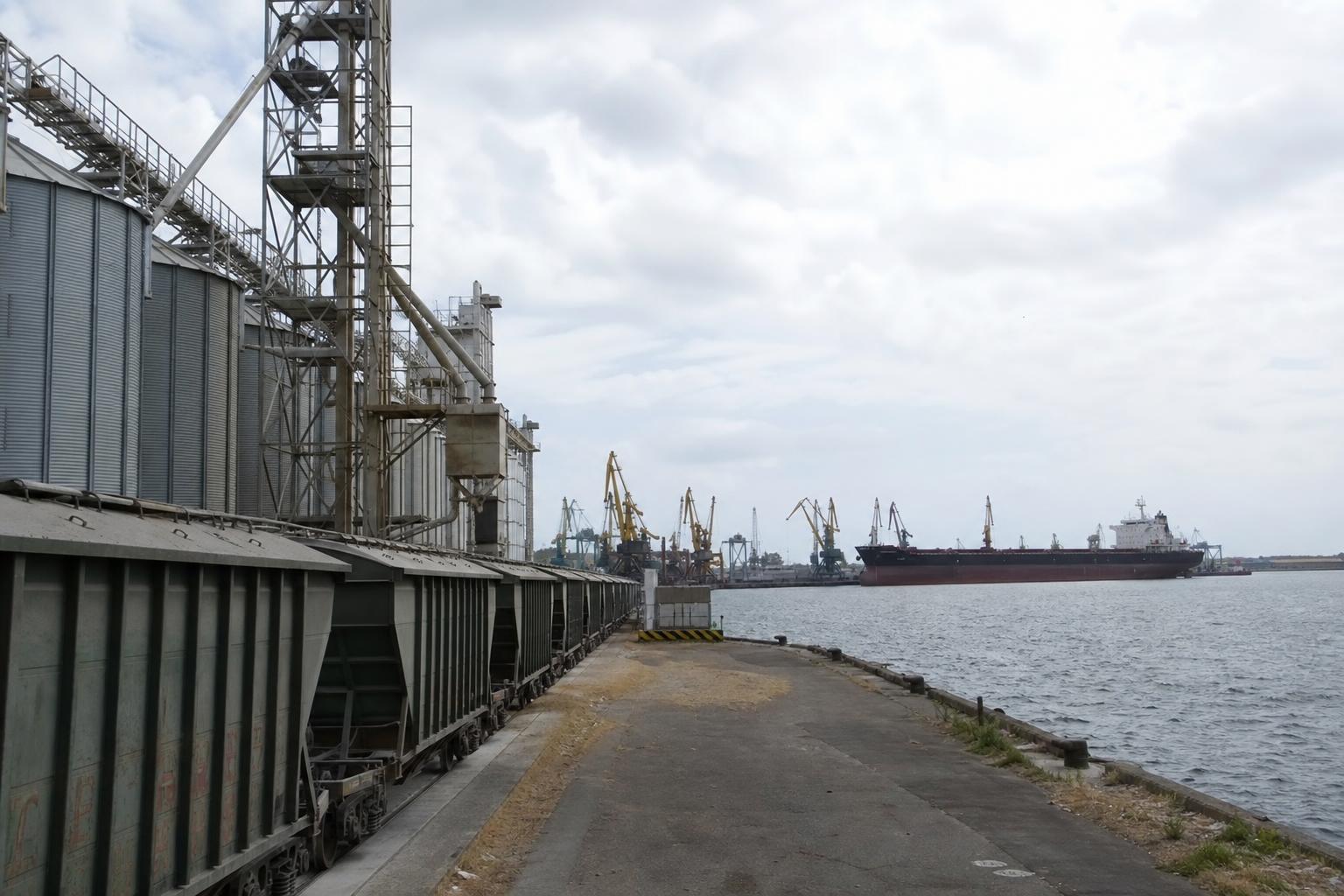
Ukrainian agricultural logistics is entering a period of heightened uncertainty. For grain sellers, traders, elevators, and carriers, the key factors remain the safety of maritime routes and the cost of rail transportation to ports and inland hubs.
Recent market reports indicate two signals to consider in contracts and shipment planning: new attacks on civilian vessels heading to Ukrainian ports and a proposed increase in Ukrzaliznytsia freight tariffs.
Maritime Sector: Security Risks Back in Focus
On the night of June 22, Russia attacked civilian commercial ships via drones en route to Ukrainian ports. This was reported by the Ukrainian Sea Ports Authority and the Ukrainian Navy.
The most serious consequences were recorded on the bulk carrier VICTRESS: after a hit, a large fire broke out, and the vessel sustained significant damage. On board were nine crew members from Egypt, Turkey, and India. One sailor, a 58-year-old cook, was killed; others were evacuated.
There were also reports of damage to civilian ships flying flags of Palau and Belize. No casualties among their crews were reported, and the ships continued their routes.
For agricultural exports, this is not only a safety issue. Each incident at sea can impact shipowners’ willingness to enter the region, loading schedules, insurance conditions, and freight negotiations.
Railway Sector: Proposed 30% Rate Increase
The Ukrainian Ministry of Community and Territorial Development has published a draft order proposing a 30% increase in freight rail tariffs starting August 1, 2026. The document is open for public consultation.
A separate section pertains to the tariffs for empty wagons. It is proposed to unify the tariffs and set a single coefficient of 5.139. According to the ministry, this would increase tariffs for transporting empty wagons after unloading of cargo in the 1st and 2nd tariff classes by 60%, while tariffs for wagons from the 3rd tariff class would remain unchanged.
The Ministry explains that the initiative is driven by the fact that the last tariff increase occurred nearly four years ago, and the costs for carriers have risen significantly. Among the reasons cited are the producer price index for industrial products at 252.1%, a 12.5% decline in freight volumes in 2025, Ukrzaliznytsia’s net loss of UAH 7.6 billion in 2025 and UAH 9.3 billion in the first four months of 2026.
The ministry estimates that Ukrzaliznytsia’s funding deficit this year exceeds UAH 26 billion. The expected additional revenue from the tariff increase is approximately UAH 8.6 billion.
Considerations for Sellers and Buyers of Agro-Products
- Fixing the logistics component. If the contract involves deferred delivery, it is important to specify who bears the risk of tariff changes.
- Route planning. When alternatives exist between port, rail, and road transport, the economics should be recalculated after each tariff or security condition change.
- Loading conditions. For batches of grain, oilseeds, and processing products, it is crucial to agree on wagon submission deadlines, downtime, responsibility for delays, and schedule flexibility.
- Monitoring tariff project developments. Until the order is officially approved, the market should track public discussions and potential changes in the final version.
Key Conclusions for Agro-Logistics
The sea corridor remains critically important for exports, but security risks could affect transportation costs and stability. Simultaneously, railway logistics may become more expensive if the proposed tariff increase is implemented.
For the market, this means that the product price at elevators or warehouses will increasingly depend on precise logistics calculations. Errors in delivery costs can quickly erode margins, especially for bulk export crops.
Implications for the Market
Salespeople on AgroPost should specify actual shipment conditions, available transport options, and readiness to work with different delivery bases. Buyers and traders should incorporate scenarios of higher railway logistics costs and possible delays at sea into negotiations. In the near future, competitive advantage will depend not only on the price of agro-products but also on the ability to quickly confirm routes, transport, and delivery schedules.
Comments
No comments yetNo comments yet - be the first.