
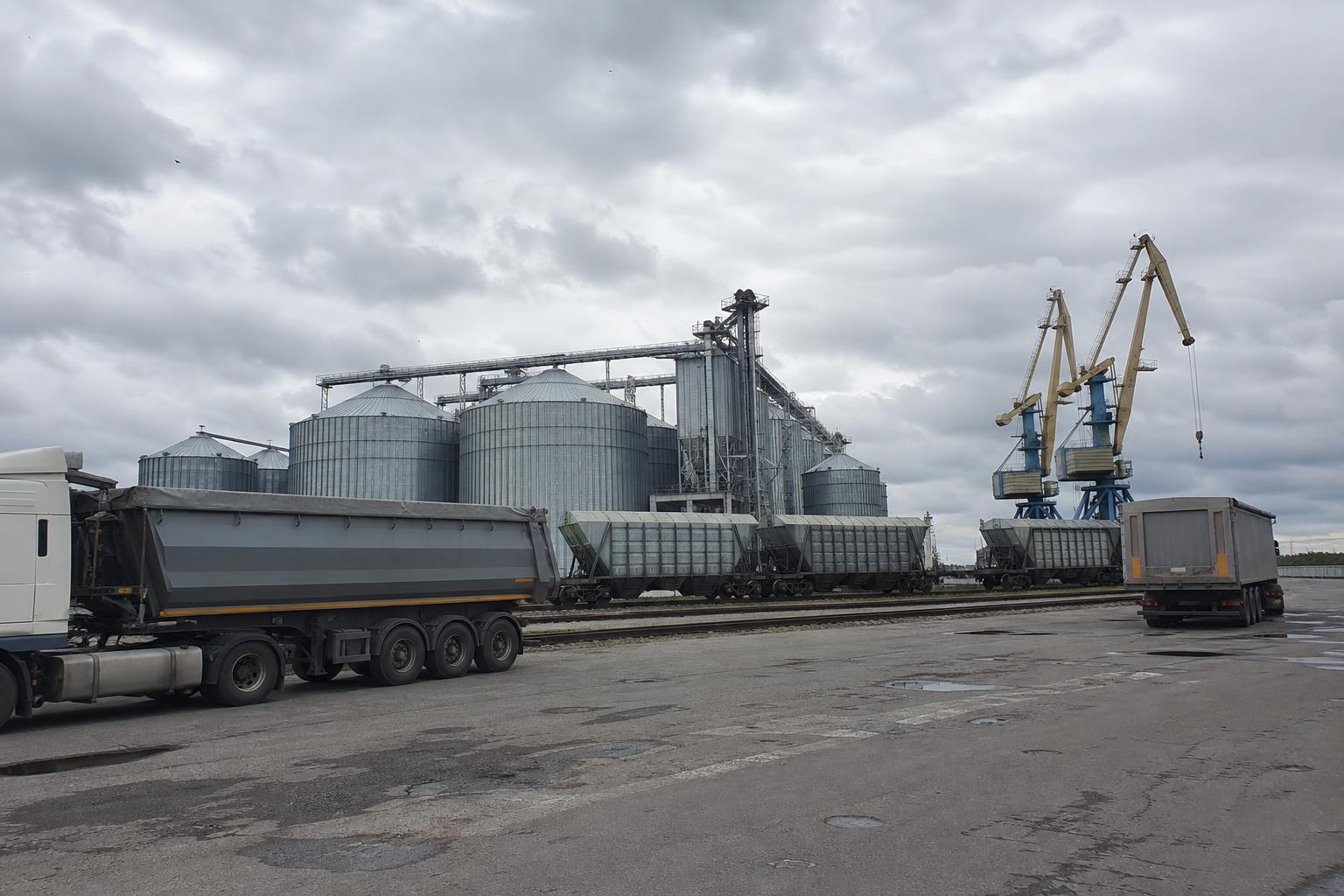
Ukrainian agricultural logistics at the end of summer has once again become a key factor in pricing. For grain and oilseed sellers, not only yield and processor demand matter, but also port accessibility, freight rates, wagons, and terminals.
According to industry media reports, August grain exports may show one of the weakest results since the onset of the full-scale war. Against this backdrop, traders and producers are more actively exploring alternative routes and risks of delays.
Deepwater ports remain the main export hub
The ports of Greater Odessa, according to data presented in specialized publications, account for approximately 90% of Ukrainian grain shipments. Therefore, any complications in this area quickly impact domestic purchase prices and sales plans.
In August, it was reported that Ukraine exported about 500,000 tons of grain since the beginning of the month, which was roughly one-fifth of the potential volume. This signals to the market: even with available stock, the physical possibility of export becomes a constraint for farmers’ working capital.
There is also an ongoing discussion about involving foreign ships for exporting agricultural products via the Black Sea. However, at present, this is a political and security initiative rather than a ready commercial mechanism for planning shipments.
Alternative routes: more expensive, slower, but necessary
Due to risks in the Black Sea, agribusiness is paying closer attention to the Danube, rail, road, and combined schemes. Such routes can support exports but often entail higher costs and greater dependence on queues, throughput capacity, and slot approvals.
Market reports already mention increased freight rates from Danube ports due to vessel delays in Sulina. For shippers, this means logistics budgets need more frequent updates than during stable seasons.
In autumn, additional competition for transport between grain and oilseed cargoes may arise. If sunflower, corn, and other crop harvests are combined with limited route capacity, carriers will gain a stronger bargaining position.
Oilseeds: logistics influence sales strategies
For the sunflower market, logistics is one of the main pressure factors at the start of the season. PUSK analysts estimate the possible sunflower harvest in Ukraine at at least 11.5–12 million tons, with September-October being the most challenging period for prices when new crop supply sharply increases.
Initial price levels are forecasted at 19–20 thousand UAH/ton, with a risk of falling to 16–17 thousand UAH/ton amid active market entry. After the peak of supply, partial price recovery closer to December-January is possible.
For sellers, this means that decision-making regarding sales should consider not only processor prices but also delivery costs, transport availability, and payment terms. Partial sales at the start of the season and deferring the remaining batch can be an option, provided there is quality storage and clear expenses.
Tariffs, export rules, and contract planning
The Verkhovna Rada is reviewing two draft laws on temporary zeroing of export duties on soybeans, rapeseed, and sunflower. One approach proposes a zero rate for three years, while the other sets it from the law’s entry into force until the termination or abolition of martial law, but no less than two years.
The authors of these initiatives link the removal of duties to supporting purchase prices, export competitiveness, and farmers’ working capital. At the same time, this could lead to changes in logistics flows: a larger share of oilseeds might seek entry into foreign markets if rules are truly changed.
Until legislative changes are adopted, sellers should include current conditions in contracts and separately verify customs, currency, and transportation requirements before shipment.
Key conclusions for AgroPost participants
- For grain and oilseed sellers: compare not only the buyer’s price but also the net price after logistics, delays, and queues.
- For buyers and processors: it is advisable to quickly reserve transport for peak periods of new crop arrivals.
- For carriers: expect increased demand for routes to ports, border crossings, and domestic processing facilities.
- For exporters: maintain several shipment scenarios: deepwater ports, Danube, rail, and combined schemes.
What this means for the market: Ukrainian agricultural logistics again defines the real margin of deals. At AgroPost, sellers should clearly specify the basis, volume, possible shipment dates, and transport requirements, while buyers should immediately calculate the full delivery cost to find economically viable offers faster.
Comments
No comments yetNo comments yet - be the first.