
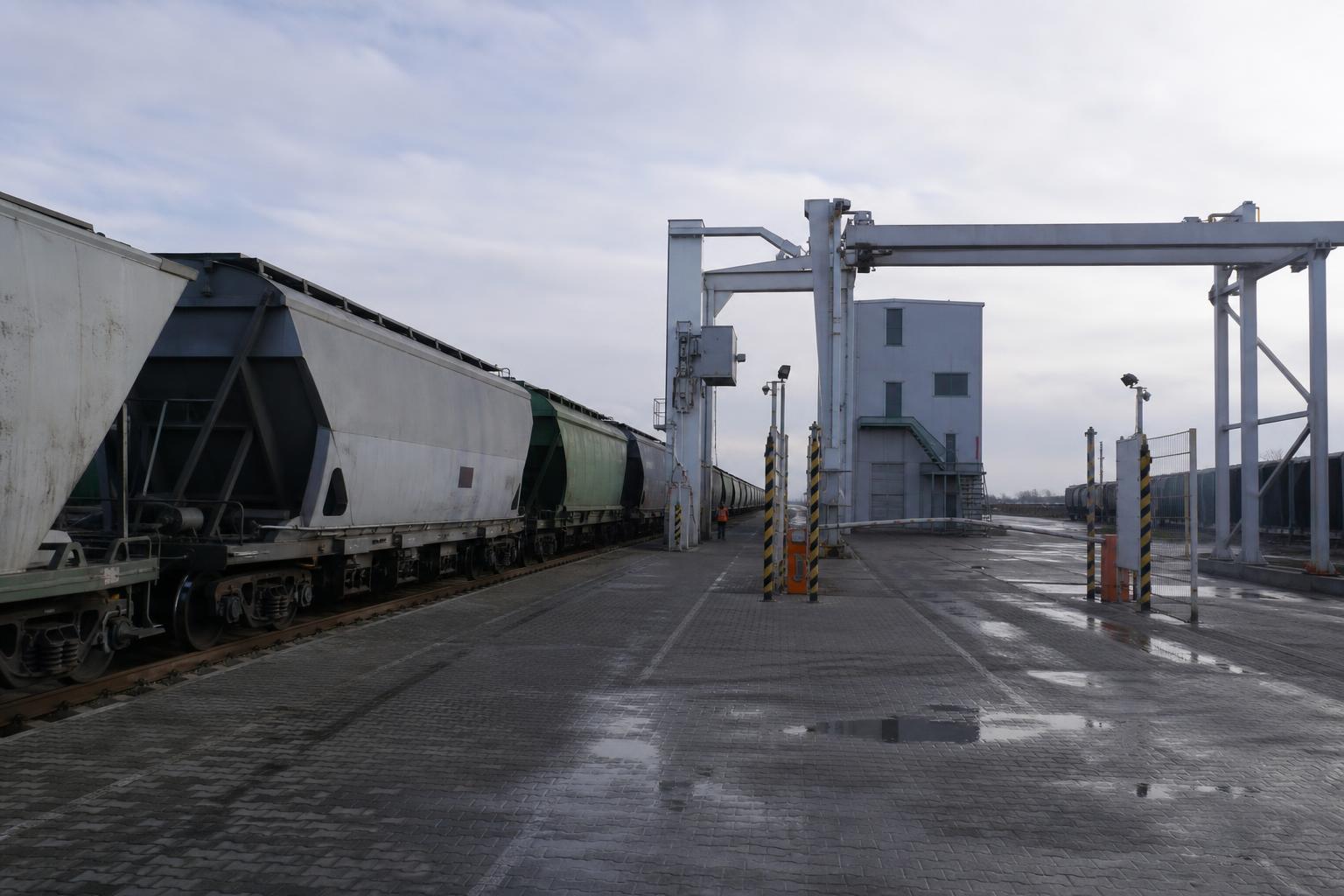
For grain exporters and carriers, logistics is once again becoming a key factor in margins. At the western border, Ukraine is preparing a technological upgrade of customs control, while alternative routes through the Danube and Romanian Constanța remain sensitive to freight rates and global prices.
Practically, this means: sellers should carefully consider not only purchase or sale prices but also the actual cost of delivery to the port or border.
Yagodyn: wagons are planned to be scanned without stopping the train
The State Customs Service is preparing to launch a stationary system for scanning railway wagons and containers at the "Yagodyn" checkpoint on the Poland border.
According to customs, the complex has already been delivered to Ukraine, and construction work and infrastructure preparations for installation are ongoing. After installation, configuration, and testing, the system is expected to operate around the clock.
The main advantage for freight flow is control without stopping the train. The scanner will automatically generate X-ray images of wagons and containers, helping to detect hidden cargo, including in structural elements of rolling stock.
The system provides for two-way scanning and automated selection of wagons for inspection. Passenger wagons and locomotives are to be excluded from scanning by software.
What this means for agricultural cargo
For agricultural exports, rail remains one of the primary channels for delivery to the border and port destinations. Faster border control potentially reduces unproductive delays, but the actual effect will depend on how the system performs after testing.
For grain, oilseed, and processing product shippers, it is important not to perceive the scanner launch as an automatic solution to all border delays. Throughput depends not only on customs control but also on coordination with the neighboring side, traffic schedules, availability of wagons, and operational discipline at stations.
- Exporters should allocate time for border crossing considering the testing period of the new system.
- Carriers should monitor changes in wagon inspection rules at Yagodyn.
- Buyers should clarify logistical terms and responsibilities for delays along the route in contracts.
Constanța: route exists, but economics are complex
UkrAgroConsult analysts assess the export route of Ukrainian wheat through the Romanian port of Constanța as potentially profitable only with a significant increase in global prices. Currently, such growth is not observed.
Part of Ukrainian grain is redirected to Constanța, but the route faces pressure from Danube restrictions. Due to shallow waters, barges cannot be fully loaded, increasing transportation costs.
Declining domestic prices in Ukraine can only partially offset the higher logistics costs. For sellers, this means that choosing a route requires calculating not only the export price but also costs for delivery, transshipment, and route risks.
Seasonal signal for the wheat market
According to analysts, the 2026/27 wheat export season is developing unevenly via Black Sea ports. Ukraine and Russia are experiencing slower shipment rates, although volumes remain higher than last season.
Meanwhile, shipments through Romanian and Bulgarian ports are accelerating but still lag behind last year's levels. An increase in exports in August is expected to be more focused on the Constanța–Varna–Burgas route, while Ukrainian and Russian port routes remain risky.
For AgroPost participants, this is a practical signal: proposals with delivery bases to the western border, Danube ports, or Romanian routes should be accompanied by a clear logistics calculation. Otherwise, an attractive price may quickly lose its advantage due to transportation costs.
Implications for the market: Ukrainian agrarian logistics are moving in two directions simultaneously — technological acceleration of control at the railway border and tighter economics of alternative export routes. Sellers and buyers should compare routes not only by formal availability but by total delivery costs and actual cargo passage risks.
Comments
No comments yetNo comments yet - be the first.