
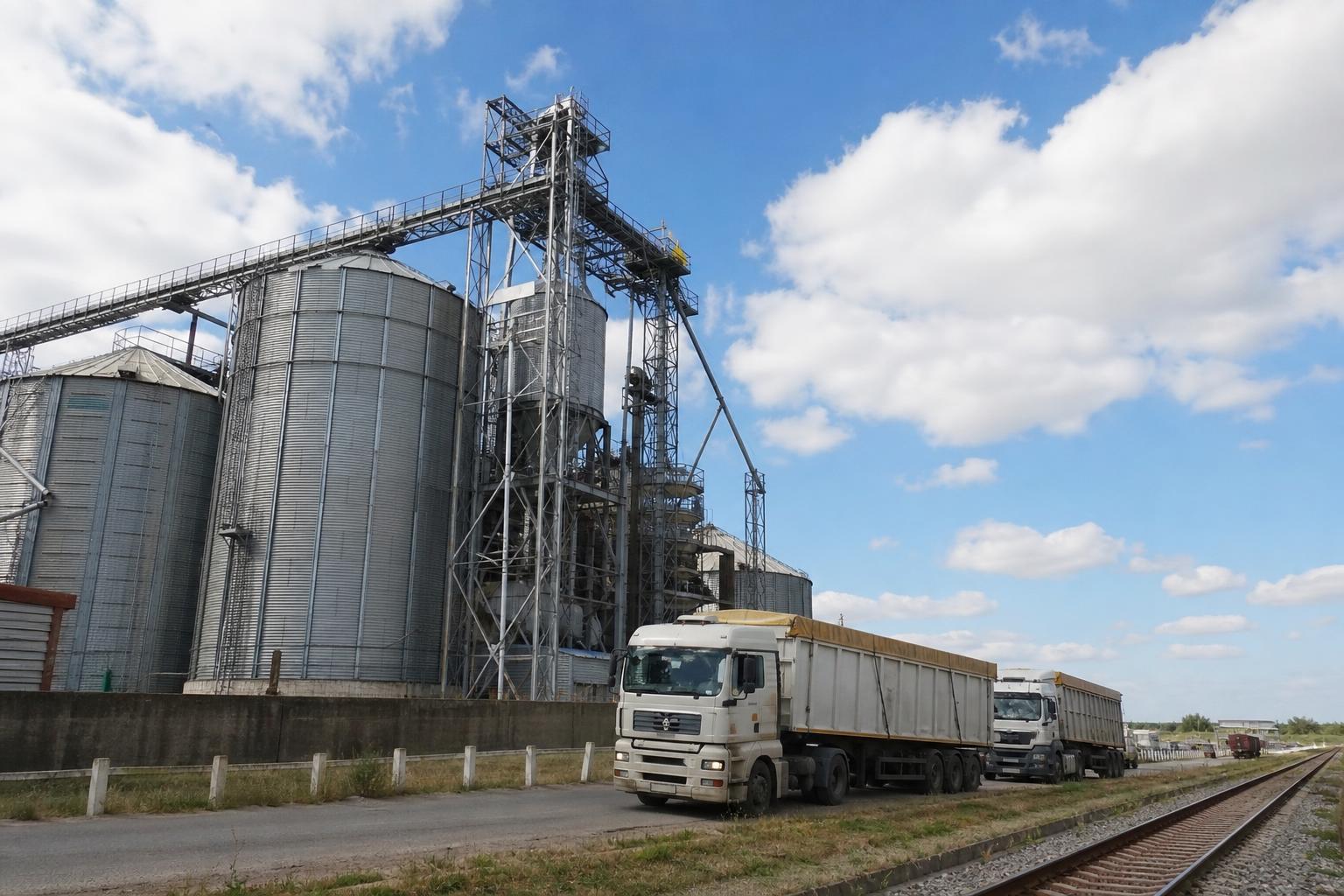
The Ukrainian grain market is entering a new season with a high dependence on logistics. The maritime route remains risky, the Danube faces restrictions due to low water levels, and the western border is increasingly becoming not only a backup route but also a price benchmark for some deals.
For grain sellers, this means that the farmgate price is increasingly influenced not only by global quotations but also by access to railcars, trucks, barges, border crossings, and elevator infrastructure.
New crop corn: Western border sets a separate price signal
According to broker market data, forward contracts for Ukrainian corn delivery in October-December via the western border were concluded at 192–194 euros/ton on FCA Chop terms. For deliveries in January-June, the benchmarks were higher — 198–206 euros/ton FCA Chop.
This is an important signal for producers planning to sell the new harvest. If the maritime channel operates unstably, buyers and traders are more actively assessing the economics of land export, making the price at western logistics hubs a practical market benchmark.
The demand could also be supported by the situation in the EU. Sources indicate that the condition of corn crops in Europe is deteriorating, with France's corn production estimated at around 9 million tons. This could increase the EU's import needs, although the impact on Ukrainian prices will depend on transportation costs and route availability.
Danube and Constanța: bottlenecks for grain flows
The Danube route remains one of the key alternative pathways for Ukrainian grain, but its capacity is limited by weather and infrastructure factors. Due to record low water levels, barges are forced to carry less cargo, increasing river logistics costs and waiting times.
The Port of Constanța handles grain by trucks, rail, and barges, but during low water periods on the Danube, cargo shifts more to road and rail transport. This creates competition for transport between Ukrainian shippers and Romanian farmers, especially amid expectations of a large wheat, barley, and rapeseed harvest in Romania.
Additionally, the limited substitutability of routes exerts pressure on the market. According to sources, rail and Danube routes together can provide only about one-third of the capacity of Ukrainian Black Sea ports.
Polish transit: discussions between Ukraine and partners
Ukraine and Poland are exploring options to increase the transit of agricultural products. The focus is on border crossing capacity, coordination of rail, customs, border, veterinary, and phytosanitary services.
Potential routes include Polish ports Gdansk, Szczecin, Świnoujście, and Gdynia. The key issue for business is route economics: transportation costs must allow Ukrainian grain to remain competitive for the end buyer.
For elevators and traders, this means planning shipments more flexibly. One route may be cheaper but slower; another may be more expensive but critical to meet contractual deadlines.
Elevators and storage: the risk of capacity shortages returns
Amid export challenges, the role of storage is increasing again. According to the Ministry of Agrarian Policy, in November, the storage capacity deficit could range from 7.5–8 million tons up to 11 million tons.
This presents a practical challenge for farmers: if grain cannot be quickly exported, there is a growing need for accessible elevator services, temporary storage, processing, and effective queue planning for shipments.
For elevator owners, the current situation may boost demand for acceptance, drying, cleaning, and accumulation services for export batches. At the same time, risks of transport delays and uneven grain flows require clearer communication with clients.
Key conclusions for grain sellers and buyers
- New crop corn is increasingly aligned with land export prices, especially at western logistics points.
- The Danube route remains important, but low water levels limit barge loading and increase logistics costs.
- Polish transit can be an additional option, but its attractiveness depends on tariffs, queues, and processing speed.
- Elevator capacities again influence prices: those with storage space can more flexibly choose the timing of sales.
Implications for the market. In the near future, grain trading in Ukraine will be more closely tied to logistical capabilities than to a single export channel. For AgroPost sellers, it is important to clearly specify the basis, shipment availability, grain quality, and delivery options to the elevator or border point. Buyers should compare not only the price per ton but also the total route cost, timelines, and risks of fulfilling the deal.
Comments
No comments yetNo comments yet - be the first.