
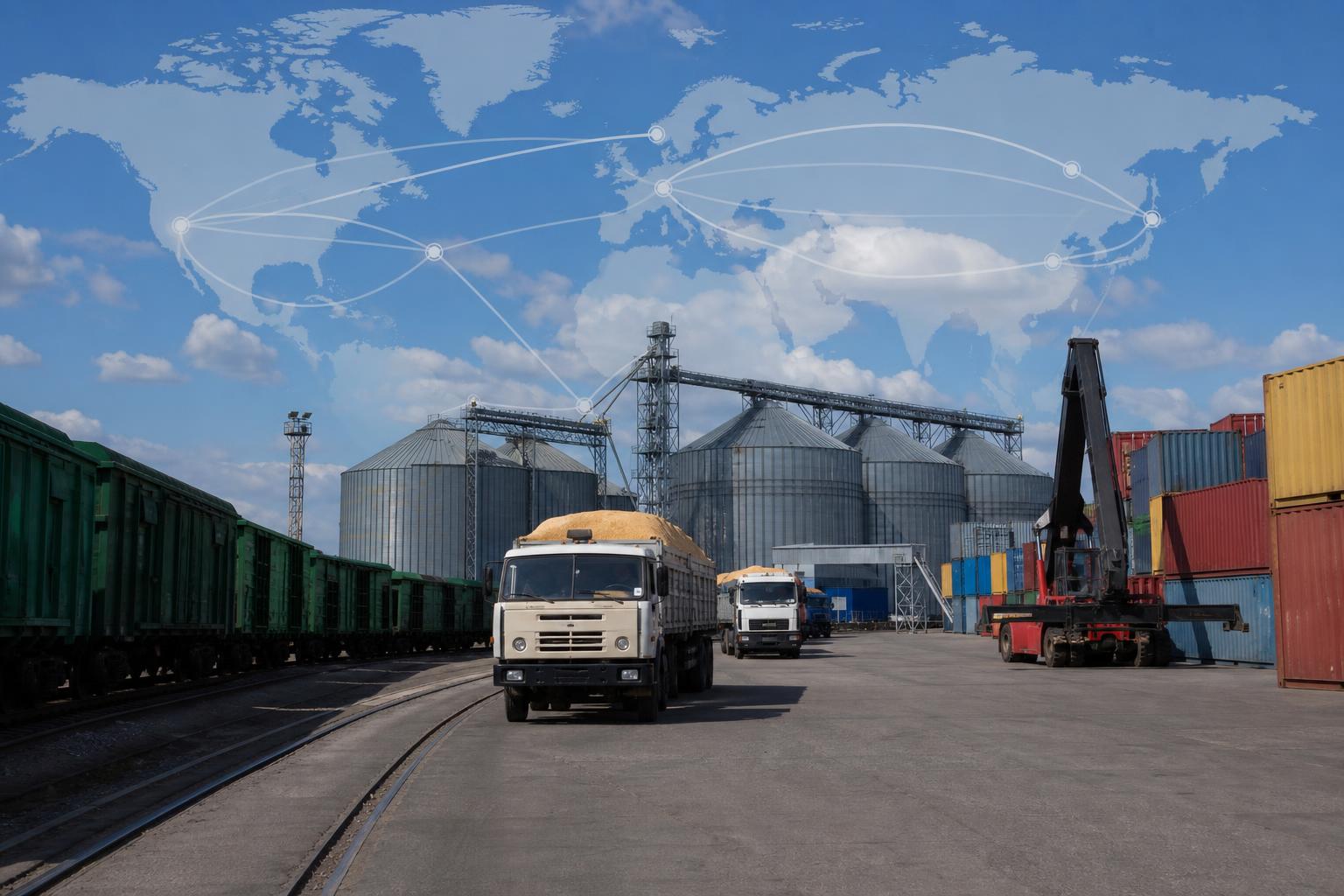
The Ukrainian grain market is entering a period of increased logistical uncertainty. Following intensified attacks on ships in the Black Sea and port infrastructure in the Odessa region, some shipowners have started to avoid Ukrainian ports, and certain freight agreements are being reviewed or canceled.
For grain sellers, this means that prices based on CPT-port terms are becoming more sensitive to freight rates, insurance costs, and terminal accessibility. For buyers and traders, the focus shifts not only to the price per batch but also to the actual possibility of exporting it within the agreed timeframe.
Port Export: Market Incorporates Risk into Procurement
According to freight market participants, shipowners are more cautious about entering Ukrainian ports. Existing bookings are being reviewed, and some freight agreements are being canceled.
Additional pressure has arisen from the insurance sector. Insurance companies have temporarily suspended issuing new war risk policies for vessels and cargo heading to Ukrainian ports and are revising premium levels considering the risks.
This has led to decreased activity on CPT-port terms in the grain market. Some traders have halted new purchases and are reassessing risks, while certain buyers have already reduced their purchase prices for the new harvest grain by 300 UAH/ton.
Alternative Routes Gaining Attention
Amidst port instability, interest in alternative Black Sea and European routes is increasing. Market participants note heightened attention to the Romanian direction, particularly to Constanța.
According to brokers, offers for Romanian feed wheat for August deliveries reached 216 €/t FOB Constanța, approximately equivalent to $247/t. A week earlier, similar offers were reported at $228–229 FOB Constanța.
Some Romanian sellers have temporarily paused active sales, awaiting further developments. If disruptions in Black Sea exports persist, Romanian and Bulgarian grain could strengthen their role as alternative supply options for importers.
Dry Ports: Not Only Storage but Also Rapid Transshipment
In the western direction, the strategy of "Mostyska Dry Port" in Lviv region is illustrative. The terminal does not plan to expand grain silos, although the initial project envisaged increasing storage capacity to 12,000 m³.
Currently, the grain complex has silos with a total volume of 4,000 m³. The company explains that over four years of operation, there has been no need for larger silo storage capacity, so investments are being directed toward container infrastructure and covered warehouses for grain staging.
The grain segment of the terminal functions as a storage site for forming railway batches. One batch amounts to 1.6–1.8 thousand tons, with grain arriving by rail and truck, accumulating over several days, and after the European warehouse is supplied, the train is loaded within 12 hours.
The average transshipment volume reaches up to 7,000 tons of grain per month, while the declared capacity of the grain complex is 720,000 tons per year. Wheat, corn, rapeseed, soybeans, and meal are shipped through the terminal.
Key Signals for Grain Sellers and Buyers
- For sellers: before listing a batch, clarify not only the price but also the buyer’s readiness to accept grain on a specific basis and at a specific terminal.
- For buyers: it is advisable to specify the logistics scenario clearly in applications — port, railway, dry port, or container route.
- For elevators: demand may shift from long-term storage to rapid accumulation, batch formation, and clean documentation for shipment.
- For exporters: reserve routes through the western border and container solutions are becoming an important part of risk management.
In AgroPost, under such conditions, it is crucial to update grain announcements with current delivery basis, batch volume, quality indicators, and available logistics. This reduces negotiation time and helps quickly distinguish actual demand from tentative interest.
Implications for the market: Ukraine’s grain trade will remain dependent on port security, insurance costs, and freight availability in the near future. At the same time, the role of dry ports, containerization, and railway batches is increasing as tools for sellers and buyers seeking alternative routes and not tying the entire deal to a single export channel.
Comments
No comments yetNo comments yet - be the first.