
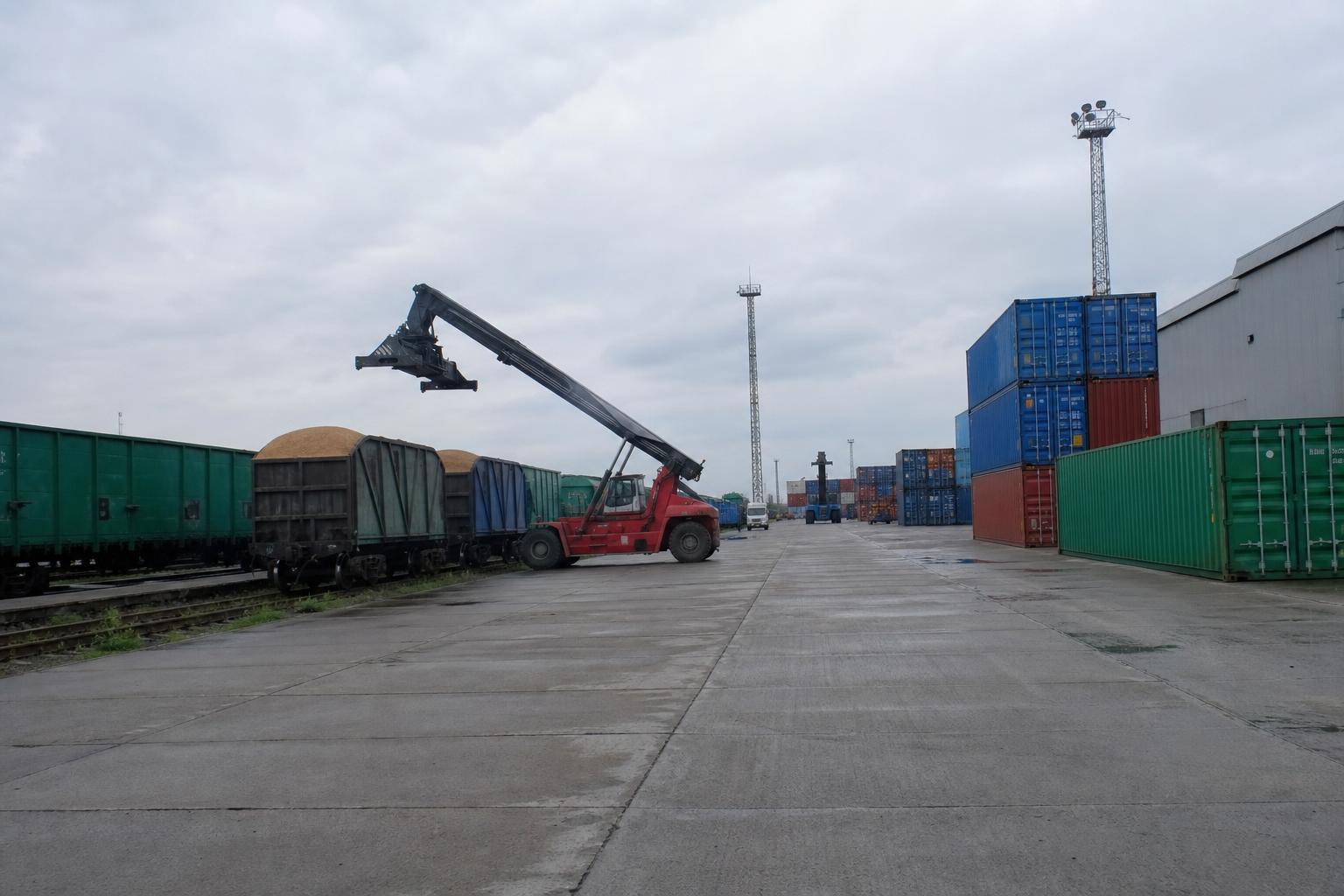
Ukrainian agricultural logistics continues to shift its focus towards western border hubs, where rail transport, containerization, and access to EU ports converge. One illustrative example is the operation of the Mostyska Dry Port terminal at the Poland border.
According to terminal representatives, in 2026, the site reached a record high of 65 trains per month. The primary destination for agricultural cargo through this hub remains Germany.
Germany Remains a Key Destination for Agricultural Cargo
Approximately 95% of the agricultural products passing through the Mostyska Dry Port are aimed at German buyers. This makes the German market an important benchmark for Ukrainian exporters planning shipments via the western border.
For sellers on AgroPost, this means that export announcements should clearly specify readiness for rail or container logistics, loading conditions, document availability, and the ability to work with European buyers.
For EU buyers, predictability of schedules, stable consignments, and a clear logistics scheme remain crucial. That is why border terminals are becoming not only transshipment points but also part of the commercial offer.
What Containerized Format Offers to Agro-Business
Container shipments are especially important for consignments requiring flexible routing and further access to sea ports. According to terminal data, containers are invariably headed to ports, as this format is tied to maritime logistics.
For sea shipments, routes to Polish ports, notably Gdansk and Gdynia, are used. At the same time, rail wagons can travel through Poland further into Germany.
This division of routes is vital for agricultural companies when choosing a delivery format. If the buyer expects cargo in Europe by rail, the logic is straightforward. If the shipment is to be exported via a sea port in the EU, different planning for containers, documentation, and timelines is required.
Technically, the terminal can load one train in 12 hours or up to two trains per day. However, the full cycle—from train acceptance at the station to its return—takes about a day due to accompanying logistical operations.
This demonstrates the practical difference between loading speed and the actual throughput capacity of the route. For agricultural cargo, not only loaders and sites are critical but also schedule coordination, wagon supply, station work, and port operations.
Terminal representatives associate volume growth with ongoing investments in infrastructure: tracks, sites, and equipment. They also highlight the personnel factor—about 250 people work at the facility, with new staff often trained on-site.
- The German route remains a priority for agricultural cargo through Mostyska, so sellers should consider the requirements of this market early in the batch formation process.
- Container logistics requires advance planning, especially if cargo is to go through EU ports.
- Record volumes do not eliminate operational constraints: processing a train takes about a day.
- Infrastructure and personnel become competitive advantages for border terminals working with agro-export.
Implications for the market: Western border terminals remain a vital support for Ukrainian agro-export, especially for deliveries to the EU. For AgroPost participants, the practical takeaway is simple: competitiveness depends not only on the product price but also on the seller’s ability to quickly confirm logistics routes, shipment formats, and realistic delivery timelines.
Comments
No comments yetNo comments yet - be the first.