
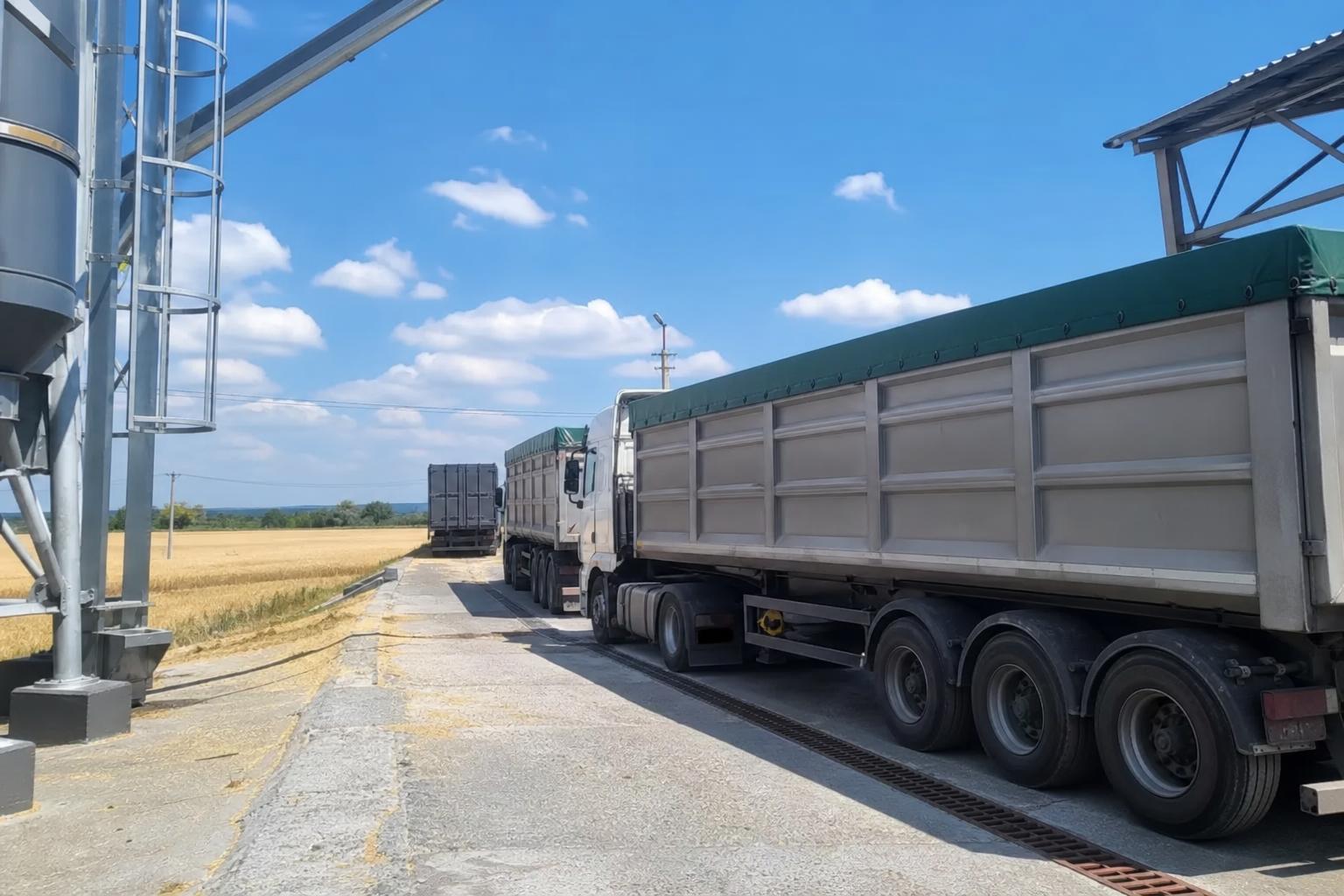
Ukraine's grain exports in the 2025/26 marketing year remain below last year's pace. According to the State Customs Service, as of June 19, shipments of grains and legumes approached 36 million tons, which is 4.1 million tons, or 10%, less compared to the same date in the previous season.
For agricultural logistics, this means not only a reduced volume of already transported goods but also the need for more careful planning for the start of the new season. In Odessa region, harvesting of winter barley and winter peas has already begun, so demand for road transport from fields, elevator acceptance, and further export shipments is expected to increase soon.
Export Base: Which Crops Drive the Cargo Flow
The largest export cargo among grains remains corn. Since the start of 2025/26 MY, 20.5 million tons have been shipped to foreign markets, 5% less than the same period last year.
Wheat exports totaled 13.4 million tons, which is 2.1 million tons, or 14%, below last year's level. This signals to logistics operators that a smaller wheat volume could influence route loading, shipment schedules, and demand for storage services.
About 1.5 million tons of barley have been exported, 35% less than last year. Rye exports amounted to only 0.2 thousand tons, compared to 10.8 thousand tons in the previous season. Flour shipments reached 60.5 thousand tons, 12% lower than last year.
New Harvest: Odessa Region First to Add Seasonal Load
Harvesting of winter barley and winter peas has commenced in the southern districts of Odessa region. According to regional authorities, this year farmers are expected to harvest grains and legumes from nearly 770,000 hectares.
The main areas are occupied by winter and spring wheat — over 522,000 hectares. Barley covers nearly 176,000 hectares, and peas about 74,400 hectares. The region also has over 175,000 hectares of rapeseed.
For transport companies, this means a gradual transition from off-season work to peak activity. The first to activate will be short-haul routes: field — terminal, field — elevator, farm — warehouse. Subsequently, depending on sales and accumulation of cargo batches, the need for transportation to ports, railways, or internal infrastructure will grow.
Considerations for Sellers and Buyers of Transportation
The lower export pace does not eliminate seasonal transport shortages on local routes during harvest. Even if overall export flow is smaller, the start of harvesting creates short windows of high demand for trucks, drivers, weighing services, and elevator acceptance.
Grain owners should plan transportation schedules in advance, including batch quality, storage availability, and permissible downtime. Grain buyers need to separately calculate logistics costs: distance to elevator or terminal, queues at acceptance points, processing requirements, and the risk of tariff changes during peak days.
Transport providers should update their offers for routes where the harvest cargo flow is already forming. On AgroPost, such requests can be useful both for farmers seeking short-haul transport and traders requiring regular shipments for export batch accumulation.
Key Conclusions for Logistics Planning
- Grain and legume exports in 2025/26 MY as of June 19 total nearly 36 million tons, 10% behind last season.
- Corn remains the largest export cargo — 20.5 million tons.
- Wheat forms the second-largest flow — 13.4 million tons.
- Barley has experienced a significant decline in exports but is the first to enter logistics for the new harvest in the south.
- Odessa region has already started harvesting, with grain and legume areas estimated at nearly 770,000 hectares.
Implications for the Market: the agricultural logistics sector is entering a period where two key tasks are simultaneously critical — completing the export season with lower volumes and quickly organizing transportation for the new harvest. Grain sellers should book transport and elevator capacities in advance, while carriers should actively offer current rates and routes where demand is already emerging.
Comments
No comments yetNo comments yet - be the first.