
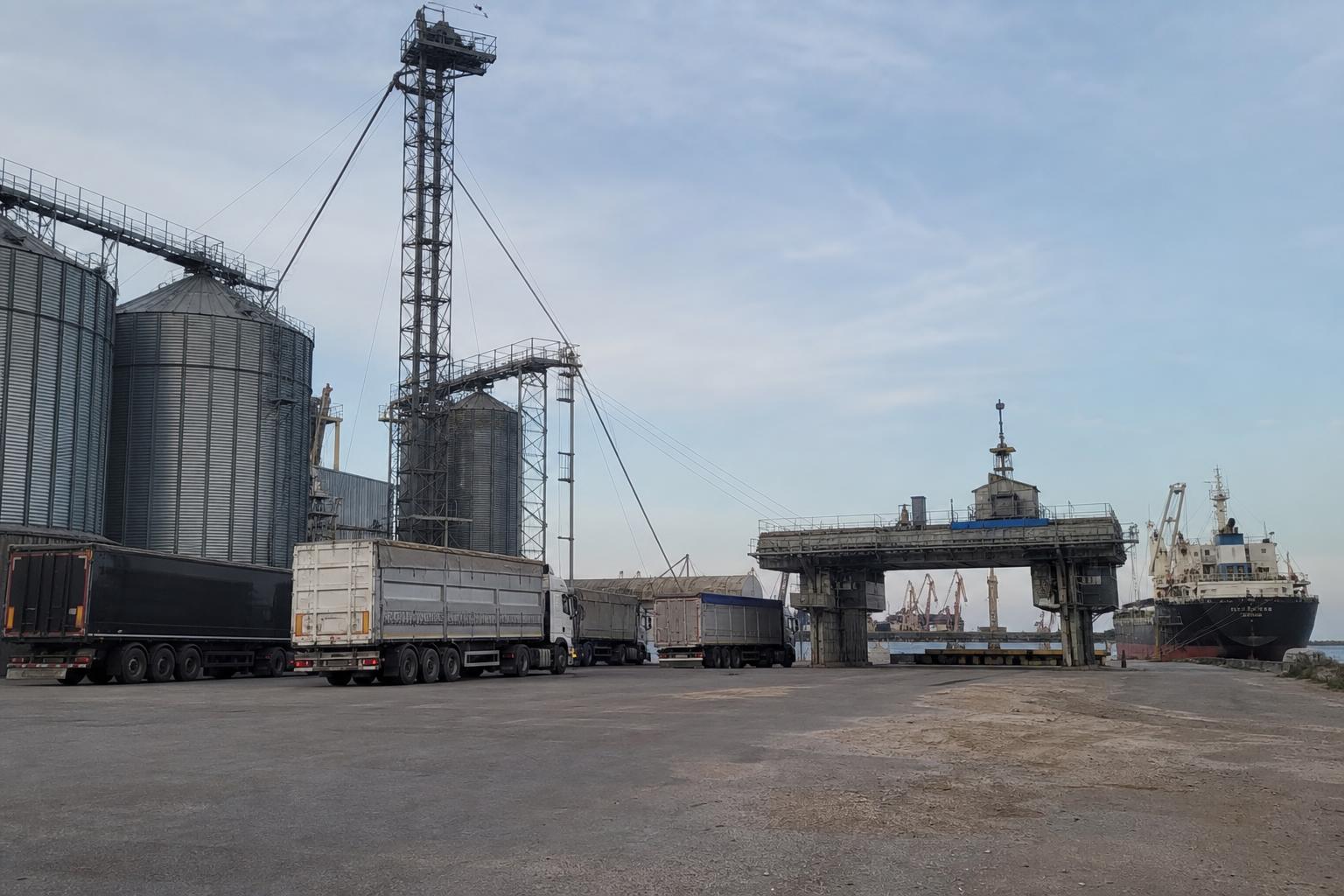
Ukrainian agricultural logistics is entering a period of increased focus on routes, transportation rates, and loading speed. The wheat market is already feeling the shift to the new marketing season: the first batches of the new harvest are appearing, and price benchmarks based on CPT Odessa are decreasing.
For grain sellers, carriers, elevators, and buyers, this means the need to carefully consider not only the product price but also the full logistics economics of the deal: delivery, queue for loading, transport availability, and contract execution timelines.
Price Signal for Logistics: CPT Odessa Prices Decline
According to Spike Brokers, purchase prices for Ukrainian wheat have decreased over the week. Food wheat has fallen by $4/ton — to $213/ton CPT Odessa, and feed wheat by $9/ton, to $203/ton CPT Odessa.
For logistical planning, it is important to note that the CPT basis includes delivery to the agreed point. Therefore, even a small change in transportation costs can impact the seller’s overall margin, especially during the active market entry of new grain.
When the CPT price decreases, agricultural producers should compare trader offers, transportation costs by road or rail, and conditions for acceptance at elevators or port terminals separately.
Export Flows Are Already Straining Routes
In the first 25 days of June, Ukraine exported 1.31 million tons of wheat. Major buyers of Ukrainian grain include Algeria, Indonesia, Italy, and Turkey.
Such demand directions support the role of port logistics and transshipment as a key element of the grain supply chain. For the domestic market, this means that competition for quality delivery planning to export points will remain an important part of sales.
According to brokers, the activity of importers and traders will determine the pace of forming a new price balance. For AgroPost participants, this is a practical signal: buyers should clearly specify the purchase basis, and sellers should immediately include logistics costs in their commercial proposals.
New Harvest Intensifies Competition in the Black Sea Region
The global wheat market is influenced by the start of harvests in the Northern Hemisphere. In the Black Sea export market, new harvest grain is increasingly appearing, exerting additional pressure on prices.
Market assessments indicate that Ukrainian and Russian FOB offers remain important benchmarks for buyers from North Africa and the Middle East. For Ukrainian sellers, this emphasizes the importance of competitive logistics: the product price without controlled delivery may lose its advantage.
At the same time, global competition does not eliminate local operational issues. Producers and traders need to synchronize harvesting, post-harvest handling, storage, and transportation schedules to avoid selling grain when logistics costs are highest or most unpredictable.
Key Conclusions for AgroPost Participants
- Grain sellers should publish proposals with a clear basis: warehouse, elevator, CPT route, or other delivery conditions.
- Buyers should compare not only price per ton but also transport availability and delivery timelines.
- Carriers need to monitor seasonal increases in grain supply and update available routes proactively.
- Elevators should communicate their acceptance, handling, and loading capabilities, as operational speed directly affects deal attractiveness.
What this means for the market: Ukraine’s grain logistics is entering a season where margins will be determined not only by exchange or purchase prices but also by the ability to quickly organize delivery to the required basis. On AgroPost, market participants should make their announcements as specific as possible: product, quality, loading location, delivery conditions, and available transport.
Comments
No comments yetNo comments yet - be the first.