
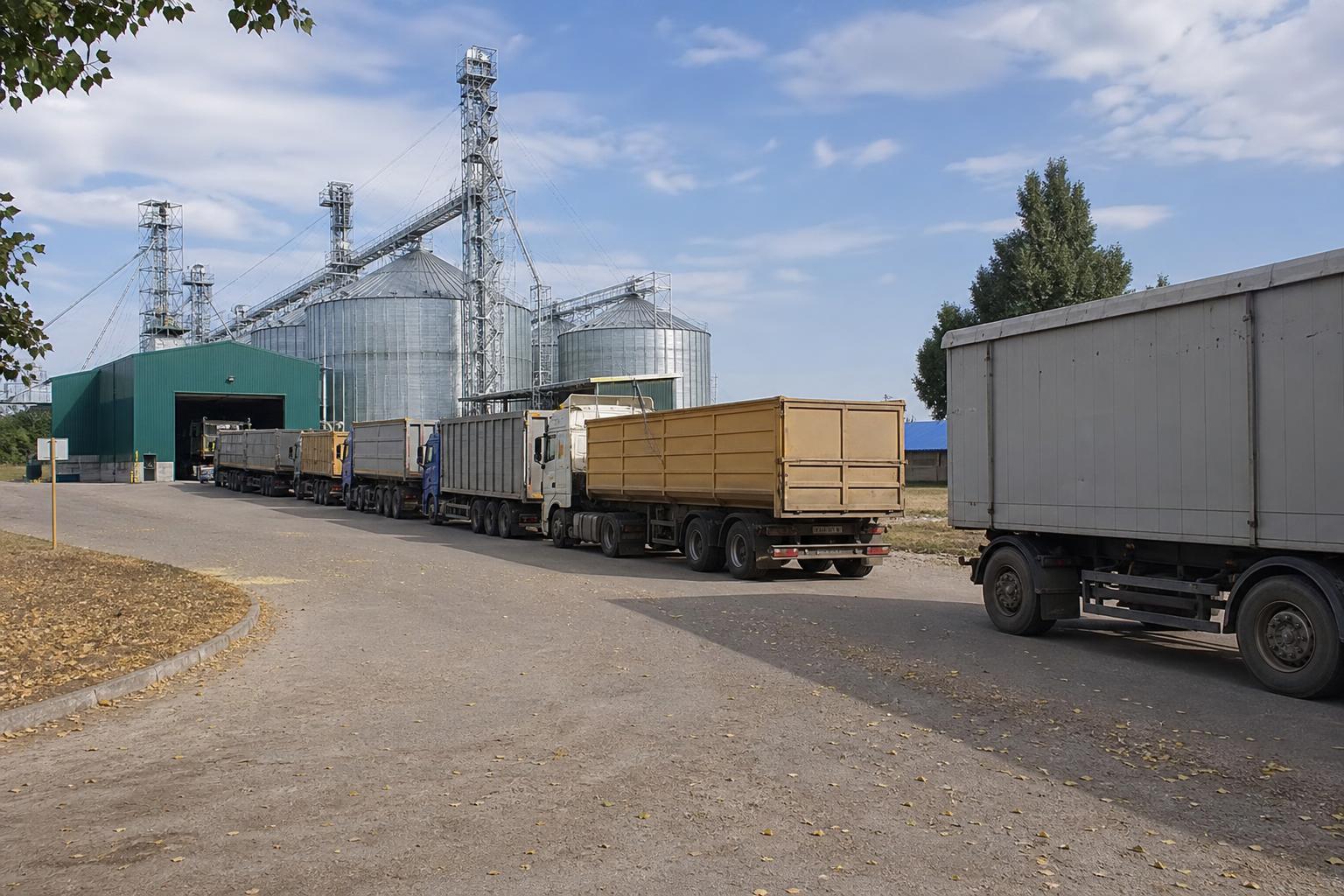
In early October, the Ukrainian grain logistics market enters a period of increased activity. The active harvesting of sunflower and other late crops has boosted demand for road transport, with some regions experiencing a significant excess of available grain trucks.
For grain and oilseed sellers, this means more challenging competition for trucks, especially on short hauls to elevators, warehouses, and transshipment points. For buyers and traders, logistics costs may become a more critical part of delivery negotiations.
Where the grain truck shortage is most acute
The most noticeable truck deficit is observed in Dnipropetrovsk, Odesa, and Mykolaiv regions. Shortages are also reported in Kirovohrad, Poltava, Cherkasy, Chernihiv, and Vinnytsia regions.
The main freight flow is directed towards Odesa region. The most active transportation of agricultural products comes from Dnipropetrovsk, Mykolaiv, Cherkasy, Poltava, Kirovohrad, and Kharkiv regions.
The current tension is caused by the combination of seasonal harvest export from fields and increased demand for prompt delivery to elevators and other storage facilities.
Short routes have seen the biggest price hikes
The highest rate increases are observed on routes up to 300 km. Over the past week, such transportation costs have risen by 10–12%, as short hauls are most frequently used for delivering crops from the field to the elevator or warehouse.
On medium and long-distance routes, the increases were more moderate — mainly 3–6%. Distances of 601–700 km saw no change in rates, while routes over 800 km increased by 3–4%.
An additional factor is diesel fuel. Over the week, average prices for diesel increased across all Ukrainian regions. In Odesa region, prices rose by 1.3%, and in Mykolaiv by 1.1%.
ELEVATORS AND TRADERS NEED TO PAY MORE ATTENTION TO THE BASIS
For elevators, the current situation underscores the importance of planning acceptance schedules. If farms attempt to harvest and transport crops en masse within a short period, truck shortages can impact not only transportation costs but also the schedule of raw material delivery.
Logistics pressure persists on neighboring export routes. Notably, rapeseed prices have decreased: at processing plants — by 100–200 UAH/ton, and towards Danube ports — by 100–300 UAH/ton. On the western border, demand remains stable at 460–465 €/ton, but sales are constrained by a shortage of available wagons at acceptable prices.
For rapeseed, rail remains the key export channel: in August–October, wagons account for 60–70% of export shipments. As of October, approximately 330,000 tons of rapeseed are contracted, with a significant portion of logistics already secured through contracts for these volumes.
Key conclusions for AgroPost participants
- Grain sellers should pre-book transport for short routes to elevators, especially in regions with a grain truck shortage.
- Buyers should clarify delivery basis and separately account for logistics costs, as transportation rates can quickly affect deal margins.
- Elevators should coordinate acceptance schedules with clients to avoid peak congestion of transport.
- Traders need to monitor wagon availability and the situation at western border crossings, especially for shipments aimed at the EU.
What this means for the market: logistics will remain one of the main factors influencing grain and oilseed prices in the near future. Agreements with clearly specified transportation, shipment deadlines, and delivery basis will have an advantage over proposals without confirmed logistics.
Comments
No comments yetNo comments yet - be the first.