
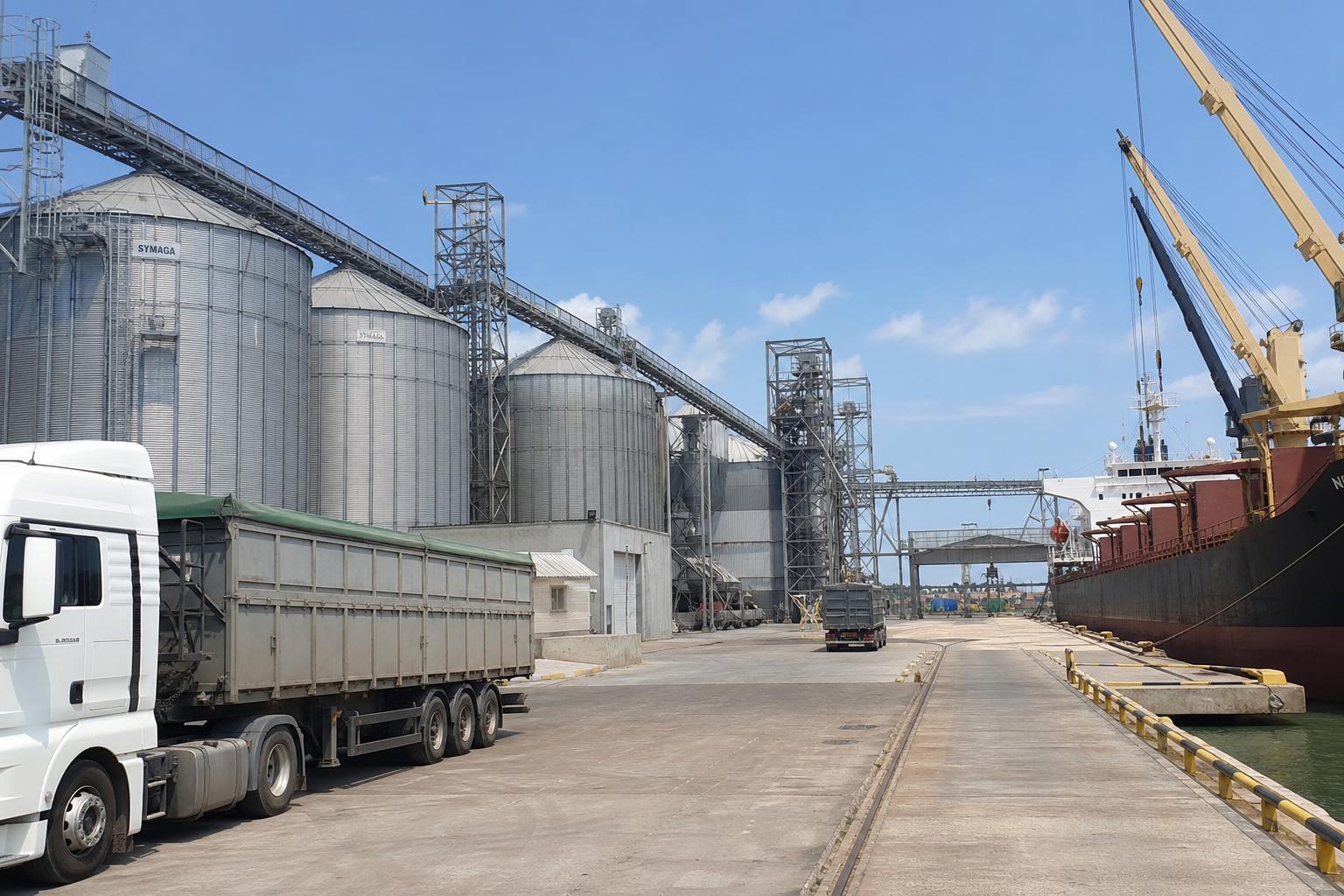
Ukrainian agricultural logistics is entering a new season with increased risks for maritime exports. Port terminals have repeatedly suffered damage due to Russian attacks, and operators report a lack of resources for rapid infrastructure recovery.
For agribusiness, this is not only a matter of port security. Any reduction in maritime capacity quickly impacts domestic prices, queues, transportation costs, and negotiations between sellers, traders, and carriers.
Seaports Remain the Main Export Hub
According to estimates, ports in the Odessa region have recently handled approximately 6 million tons of cargo per month. This route provides a significant portion of export logistics for grain and other agricultural cargoes.
At the same time, an increase in attacks on ports and vessels could, according to a government representative, reduce monthly grain shipments by about one-third. In such a scenario, volumes through Odessa ports could decrease to 4 million tons per month.
Some cargoes could theoretically be redirected to Danube terminals. However, the estimated capacity for such rerouting is around 1 million tons, as logistics in this direction are more expensive and have their own limitations.
Terminal Damage Is Not Just About Warehouses
Port operators emphasize that the recovery issue is not limited to repairing buildings or storage facilities. Terminals use specialized equipment that is difficult to replace quickly after destruction.
According to Denys Marchuk, a representative of the All-Ukrainian Agrarian Council, the total damages to terminals have already reached $1.5 billion. He also noted that terminals lack sufficient funds for full restoration.
The government recognizes the damage problem faced by port operators, but current budget resources are focused on preparing the energy sector for winter. This means that the speed of port infrastructure recovery may depend not only on state decisions but also on specific support mechanisms and the involvement of international partners.
Risks for Grain Sellers and Logistics Service Buyers
If the maritime route operates with reduced capacity, grain sellers should allocate more time for contract fulfillment and more carefully calculate logistics margins. This is especially important for farms planning sales during peak export months.
Large intermediate stocks, as discussed by market participants, could increase pressure on domestic prices if export corridors narrow. For farmers, this means greater dependence on transportation availability, elevator capacities, and trader purchase conditions.
- Grain sellers should compare not only purchase prices but also the actual cost of delivery to the port or alternative terminal.
- Carriers should expect uneven demand for shipments depending on port situations and route changes.
- Buyers and traders should incorporate flexibility regarding shipment deadlines and possible logistical adjustments into their agreements.
What to Watch in the Near Future
The key factor for the market will be the actual stability of Odessa ports’ operations. If attacks continue or infrastructure damages accumulate, agro-export may shift more rapidly to more expensive and less capacious routes.
It is also important to monitor the potential creation of a mechanism for rapid restoration of port infrastructure. Port operators have already appealed to the government and international partners to launch a dedicated support instrument for repairing damaged facilities.
What this means for the market: maritime logistics remains a fundamental channel for agro-export, but its risks must be considered in every deal. On AgroPost, sellers and buyers should proactively clarify transportation conditions, transport availability, delivery timelines, and alternative routes even before finalizing prices.
Comments
No comments yetNo comments yet - be the first.