
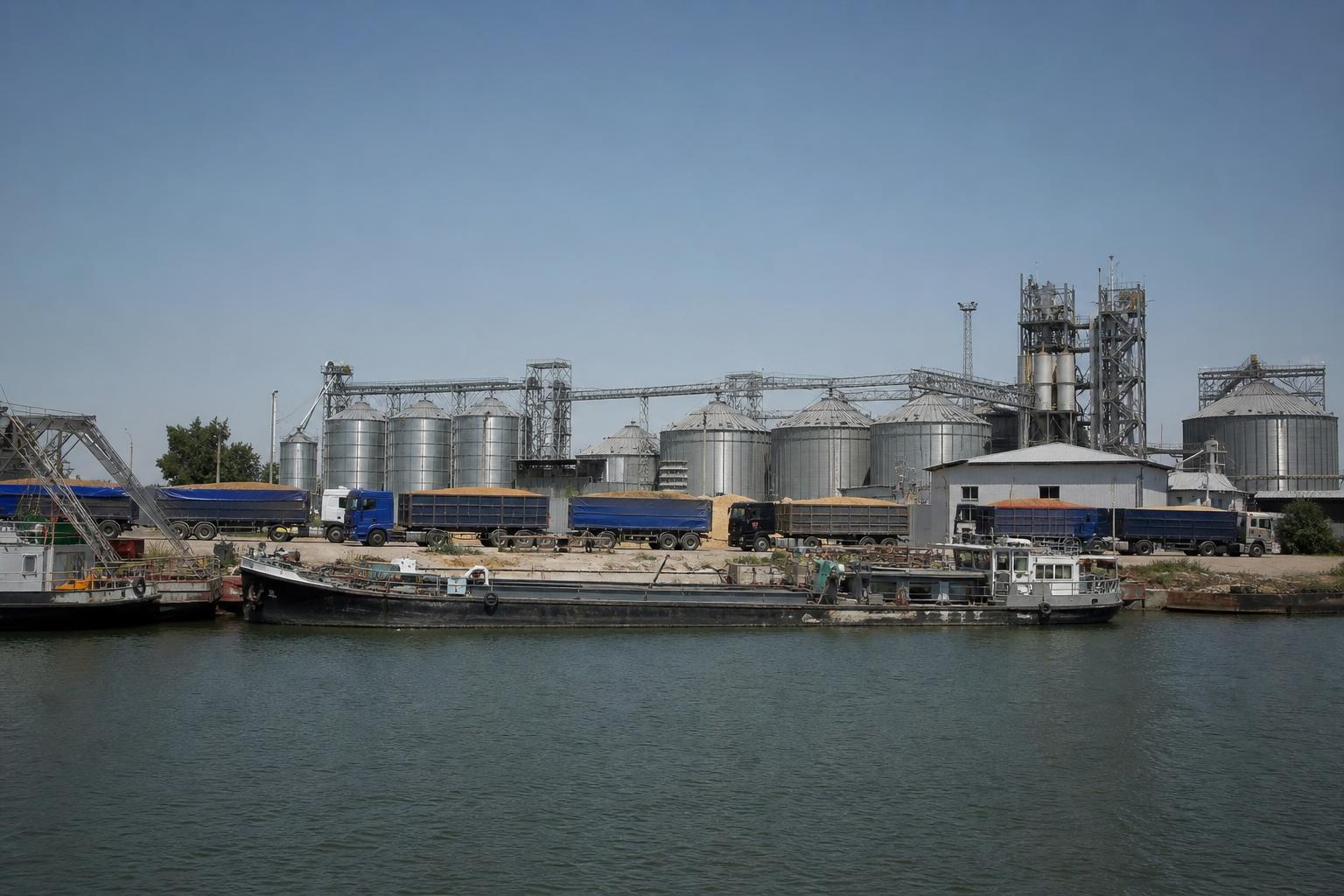
The Ukrainian sunflower market again demonstrates that the highest external price does not always translate into the best actual revenue for producers. In September, one agroholding evaluated the option of exporting seeds to Turkey but, after assessing logistics and related costs, chose to sell to a Ukrainian processing plant.
For agricultural producers and traders, this is a practical case: before signing an export contract, it is essential to compare not only CIF or FOB prices but also the final "at farm" price after all expenses and risks.
Where the export premium is lost
The agroholding's calculation started with a price of $680/ton on CIF Marmara terms. Of this amount, approximately $100/ton covered freight, customs payments, and other logistical costs to the buyer.
From this, the FOB basis price was reduced to $580/ton. Then, a 10% Ukrainian export duty of $58/ton and about $15/ton for transshipment costs were deducted.
As a result, the price at the Danube port was estimated at around $507/ton. Using an exchange rate of 44.7 UAH/$, this equated to approximately 25,800 UAH/ton including VAT.
Port delivery alters the economics of the deal
The key factor was internal logistics. Delivery of sunflower from the farm to Danube ports was estimated at roughly 2,000 UAH/ton.
After this, the calculated "at farm" price decreased to about 23,800 UAH/ton. This figure should be compared by producers with offers from domestic buyers, not just the paper export price.
A representative of the agroholding noted that, in theory, export could add an additional $60–70/ton. However, this advantage was not guaranteed, as it depended on route costs and risks.
Risks to consider in the calculation
Additional costs may arise after the basic calculation. For example, analyses of pesticide residues in Bulgaria could add another $10–15/ton.
Furthermore, delays in transportation, queues, fluctuations in freight rates, and possible demurrage on the Danube could impact costs. According to data, demurrage could amount to $2,000–$5,000 per day of delay.
This uncertainty in costs was one of the reasons the company decided against the export scenario and instead sold the sunflower to a Ukrainian plant.
Key takeaways for sellers and buyers on AgroPost
- Compare prices on the same basis. CIF, FOB, port, and farm are different price levels with different sets of costs.
- Calculate internal logistics separately. For remote farms, the route to the port can significantly reduce margins.
- Include a risk reserve. Analyses, queues, transport delays, and demurrage can quickly erode the export premium.
- Don’t overlook domestic buyers. If a plant can pick up a batch faster and with lower operational risk, its price may be competitive with export.
- Specify conditions clearly in listings. On AgroPost, it’s advisable to specify delivery basis, readiness for self-pickup, distance to elevator or port, and quality indicators of the batch.
What this means for the market. In the sunflower segment, logistics remains one of the main price determinants. A profitable deal for the seller begins not with the highest declared export quote but with a full calculation of net revenue after delivery, duties, transshipment, and potential delays. For buyers, this offers an opportunity to compete not only on price but also on speed of settlement, transparent logistics, and lower contract fulfillment risks.
Comments
No comments yetNo comments yet - be the first.