
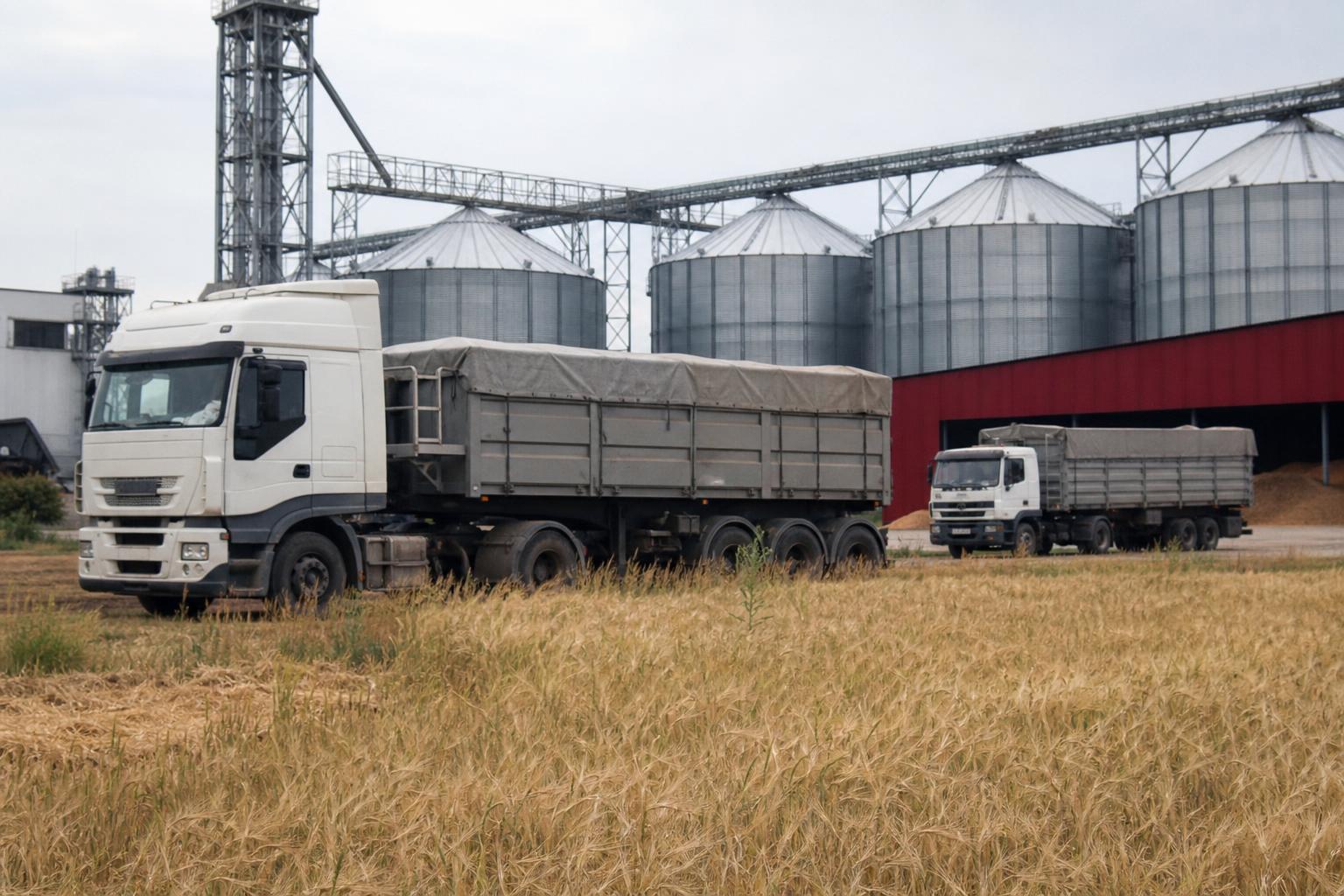
Ukraine's agricultural logistics is entering an active phase of the new season: harvesting of early grains has already begun in the south, while producers in other regions continue investing in their own storage capacities.
For the market, this is important not only in terms of yield. Grain moisture, elevator availability, own silos, and sales timing directly influence the demand for transportation, acceptance queues, and sellers’ negotiating positions.
Southern Ukraine initiates seasonal transportation load
The Agrograin Group has started harvesting early grains in the Bolhrad and Izmail districts of Odesa region. According to the company, about half of the spring barley fields have already been harvested.
The average barley yield is 6 tons/ha, with some fields depending on the agro-technical conditions yielding between 5.5 and 7 tons/ha. For logistics, this means the appearance of the first noticeable batches of the new harvest heading south.
An additional factor is grain moisture. Agrograin reported that the barley arrives with a moisture content of 12–14%, which does not require drying. This can simplify the movement of batches from field to warehouse or buyer, as there is no need to allocate time and costs for drying these volumes.
Grain quality influences route and buyer
Preliminary assessments by the company indicate that the barley has good quality indicators: the grain is well-filled, with proper weight, and free from significant disease or pest damage. It is expected to meet food-grade parameters, but final results will be confirmed by laboratory analyses.
For sellers on AgroPost, this is a practical signal: in new harvest offers, it’s advisable to immediately specify moisture, weight, shipment region, available volume, and preferred delivery conditions. For buyers, these data help to compare batches more quickly and calculate the full logistics cost.
If the grain does not require drying, it may increase its attractiveness for quick deals. However, the final price and route decisions will depend on laboratory results, acceptance conditions, and actual transport availability.
Own storage changes sales schedules
In Rivne region, the farm "Super Elite" installed a flat-bottom silo SUKUP with a capacity of 1,400 m³. The project was implemented by Grain House LLC.
The silo features a fully ventilated floor, ensuring uniform air distribution within the grain storage volume and helping to maintain stable storage conditions. The farm grows corn, soybeans, and sunflowers.
The company explained that the investment is related to expanding sowing areas and reducing dependence on external elevators. The payback period is expected within 3–5 years.
For the logistics market, such solutions mean that part of the harvest may not be transported immediately after harvesting. Producers gain more flexibility: storing grain until more favorable prices, choosing the sale moment, and not being fully dependent on external elevator availability.
Key conclusions for sellers and buyers
- New barley already influences transportation demand in the southern districts of Odesa, where harvest has started.
- Moisture of 12–14% in Agrograin’s first batches reduces the need for drying for these volumes.
- Quality must be confirmed by laboratory, especially if the batch is declared as food-grade.
- Own silos give farms more control over sales and shipment timing.
- Transport tariffs should be clarified based on specific routes, transport types, volume, and machine deployment deadlines.
What this means for the market: Ukraine's agricultural logistics is shifting from preparation to practical seasonal loading. Sellers should pre-define grain characteristics and plan exports, while buyers need to quickly verify quality, routes, and full delivery costs. On AgroPost, ads with clear batch parameters, shipment conditions, and transparent logistics will stand out.
Comments
No comments yetNo comments yet - be the first.