
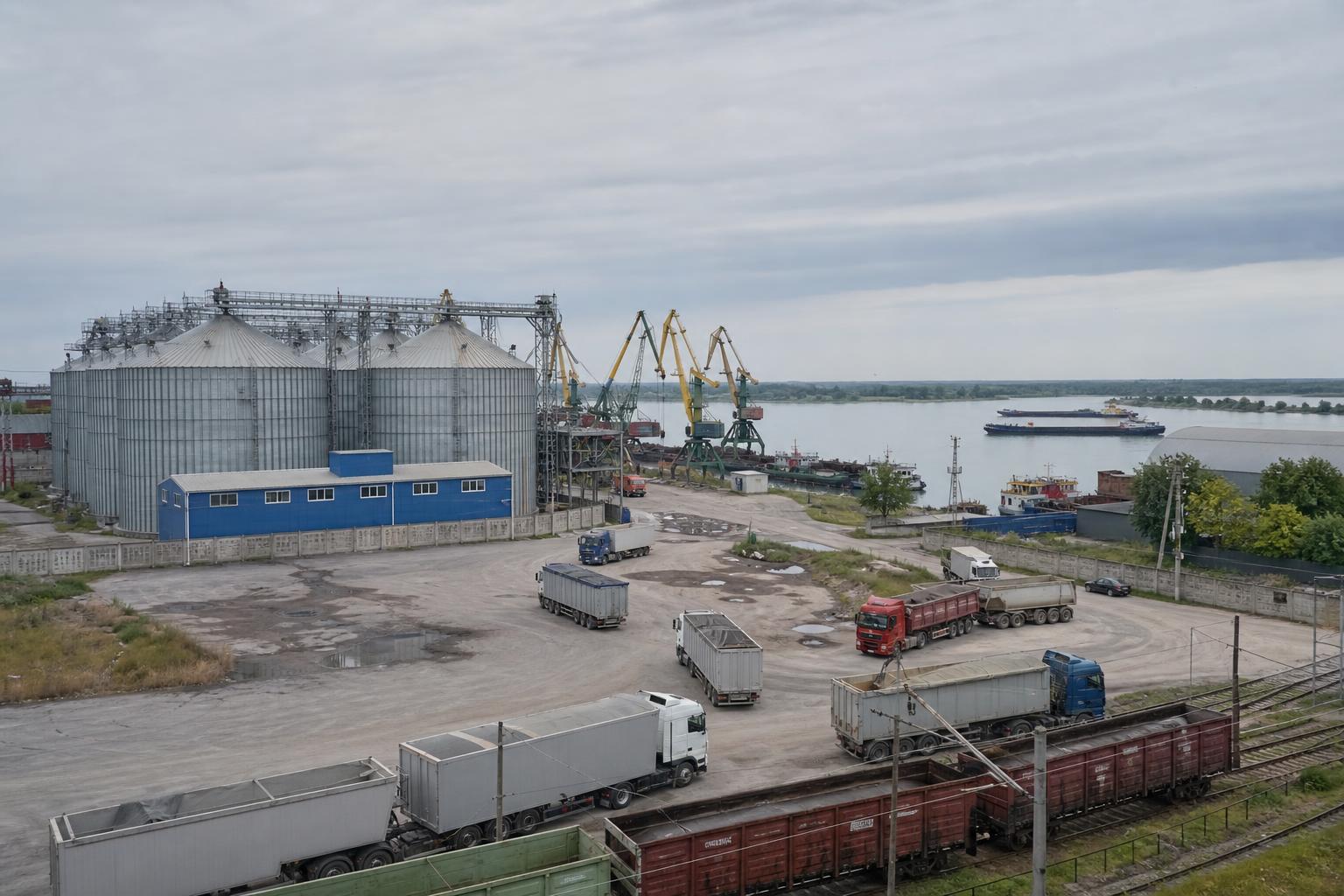
September revealed a mixed picture for Ukrainian grain exports. The Danube route has become more active, but railway transportation to ports has decreased, complicating sales planning for producers, traders, and elevators.
This signals to the market: logistics are becoming not just a cost item but a key factor influencing prices, contract timing, and buyer selection.
The Danube route is taking on a larger share
From September 1 to 24, the export throughput of agricultural products to Danube ports, including Orlivka, amounted to 917.7 thousand tons. Over the last seven days of this period, the volume increased by 319.3 thousand tons, averaging 45.6 thousand tons per day.
By September 24, the total volume of agricultural products directed to Danube ports exceeded August’s total by 22.9%. This confirms that the Danube remains one of the main alternative routes for export, especially amid uncertainties in maritime logistics.
For grain sellers, this means that demand for batches suitable for quick dispatch via Danube logistics may remain active. At the same time, final prices increasingly depend on transport availability, transshipment costs, and cargo acceptance schedules.
Railway transportation to ports has declined
Despite the growth in Danube flows, railway shipments in September appear weaker. Over 22 days, approximately 155.5 thousand tons of grain were transported by rail to port destinations, including internal deliveries to Izmail and excluding transit through Reni. This is 29.7% less than the same period in August.
Rail exports to Izmail amounted to 42.6 thousand tons, down 15.1% month-over-month. Internal deliveries to the port decreased by 47.1% to 55.5 thousand tons.
Through the port stations of Greater Odessa, 25.6 thousand tons of grain passed in 22 days of September, representing a 53% decrease compared to August.
For elevators, this trend means the need for stricter management of dispatch schedules. If rail resources or port windows are unstable, it is advisable to coordinate alternative options in advance: road transportation, rerouting batches, or sales on a self-pickup basis.
Black Sea factor remains a price risk
Ukraine currently has no positive signals for a swift resumption of full-scale grain exports via the Black Sea. According to Ukrainian authorities, Russia has rejected proposals that could facilitate the restoration of the grain corridor.
Alternative routes now account for about 45% of the required transportation volume. Ukrainian estimates suggest their maximum capacity allows for exporting only up to 50% of agricultural products.
There is also a risk that Ukraine may not export approximately 30 million tons of agricultural commodities this marketing year. This puts pressure on domestic balances, creates competition for logistics, and prompts buyers to be cautious when forming long-term contracts.
Key takeaways for sellers and elevators
- The Danube route remains active, but sales pace depends on transshipment access and transport availability.
- Railway deliveries to ports have decreased, so dispatch schedules should be agreed upon before finalizing prices.
- Buyers may incorporate logistical discounts, especially for batches without a clear export route.
- Elevators should segment stocks: separate batches for export, internal processing, and quick local sales.
- For AgroPost sellers, indicating basis, volume, quality, and available dispatch methods helps shorten negotiations with buyers.
Implications for the market: in the near future, grain prices in Ukraine will continue to depend not only on global quotations but also on the practical availability of routes. For sellers, a stronger position will be not just having grain but being ready to quickly confirm quality, batch, storage location, and a realistic logistics scenario.
Comments
No comments yetNo comments yet - be the first.