
The Ukrainian grain market is entering a new season with an uneven picture: some regions experience lower yields due to drought, while grain prices remain under pressure from logistics and export risks.
For producers, this means a difficult choice: sell now to cover expenses for fuel, fertilizers, wages, and preparation for the next season, or store the grain in anticipation of more favorable market conditions.
Volyn: Grain is available, but prices compel selective selling
As of mid-August, harvesting of barley and peas has been completed in Volyn, and wheat harvesting is 96% complete. The total grain and legume harvest in the region amounts to approximately 900,000 tons.
Dry conditions have reduced field yields. Some farms report grain losses exceeding 2 t/ha, as well as rapeseed yield reductions of 500 kg to 1 t/ha. Large farms in the region also report decreased yields: for example, wheat has dropped from last year's 9 tons/ha to about 6 tons/ha.
At the same time, farmers note a decline in purchase prices. For third-class wheat, the indicative price is around 7,000 UAH/ton compared to approximately 10,000 UAH/ton last year.
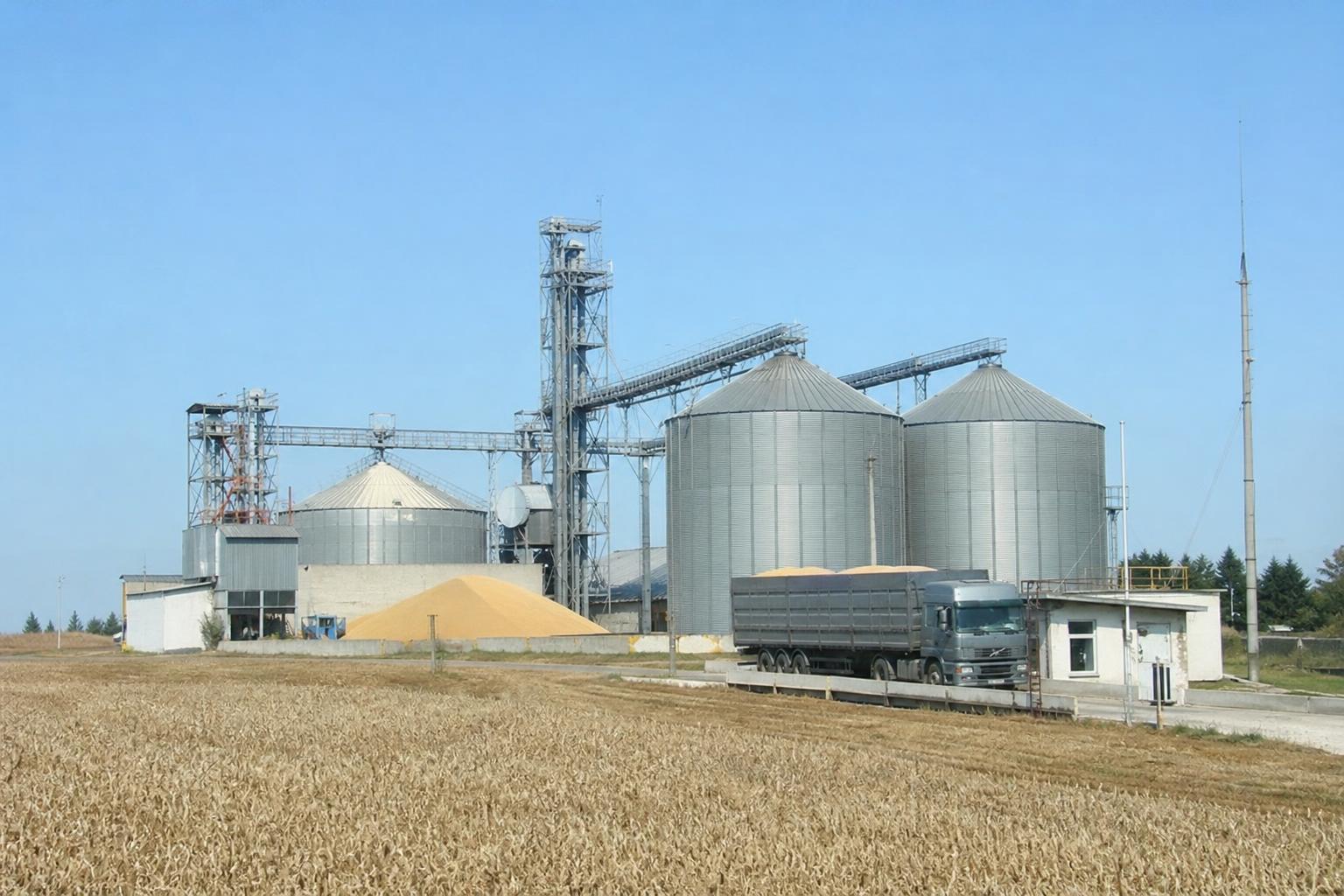
Producers cannot hold all their grain in storage: working capital is needed, and elevator and warehouse capacities must be prepared for other crops. Therefore, part of the harvest still enters the market even at lower prices.
Elevators and storage: capacity availability does not eliminate liquidity needs
According to regional authorities, storage capacities for the harvest in Volyn are sufficient. However, the mere presence of warehouses does not solve farmers’ liquidity issues.
For grain sellers, the key question is not only where to store wheat or barley but also how much waiting will cost. If a farm needs financing for autumn fieldwork or settlements with suppliers, partial sales may be necessary even in a weak price phase.
For buyers and traders, this creates an opportunity window for procurement, but the quality of batches remains an important factor. Market reports indicate availability of third-class wheat and feed grain, while high-quality food-grade grain is scarce.
Export scenarios: differences between routes amount to tens of millions of tons
ASAP Agri analysts modeled four export scenarios for grains and oilseeds from Ukraine for the 2026/27 season. The main variable is the operation of the ports of Greater Odessa and the Danube cluster.
- Without Greater Odessa and the Danube — export may be limited to 13.8 million tons, mainly via rail and road transport.
- Danube partially compensates for the loss of Greater Odessa — the estimated volume is 23.6 million tons.
- Partial operation of Greater Odessa ports — the scenario foresees about 38.2 million tons of export.
- Full recovery of Greater Odessa operations — potential could reach 45.8 million tons.
The difference between the worst and best scenarios is 32 million tons. For grains, this is critical, as wheat, barley, and especially corn are more dependent on large-scale maritime logistics.
Estimates for the main grain and oilseed harvests also remain high: USDA increased the forecast to 85.7 million tons, while ASAP Agri estimates production at 86.1 million tons. Meanwhile, export expectations vary: USDA cites 42.6 million tons, ASAP Agri projects 45.8 million tons, and the Ministry of Economy estimates the grain export potential at 38–40 million tons.
Logistics are embedded in purchase prices
Port logistics constraints are already affecting costs for alternative routes. According to ASAP Agri, freight costs for barges from Danube ports to Egypt increased by approximately $40/ton over a month.
Costs for rail transportation to the Danube and transshipment are also rising. For producers, this means additional logistics often reduce the purchase price rather than being compensated separately.
Practically, sellers should compare not only the base buyer price but also delivery conditions, distance to elevator or terminal, queues, quality requirements, and payment terms.
Key conclusions for grain sellers and buyers
- Partial sales remain an unavoidable strategy for farms needing working capital.
- Storage makes sense only if expected price increases outweigh costs and waiting risks.
- Buyers should monitor batch quality more carefully, especially the ratio of food-grade to feed wheat.
- Elevators and traders are gaining an increased role as intermediaries between producers and unstable export logistics.
- Corn may remain the most sensitive to maritime route restrictions due to volume and the need for affordable bulk logistics.
What this means for the market: Ukraine’s grain sector will largely depend on two factors in the near future — the pace of farm sales and the actual capacity of export routes. At AgroPost, sellers should clearly specify the class, moisture content, volume, and shipment location, while buyers should quickly respond to high-quality batches with transparent logistics and payment conditions.
Comments
No comments yetNo comments yet - be the first.