
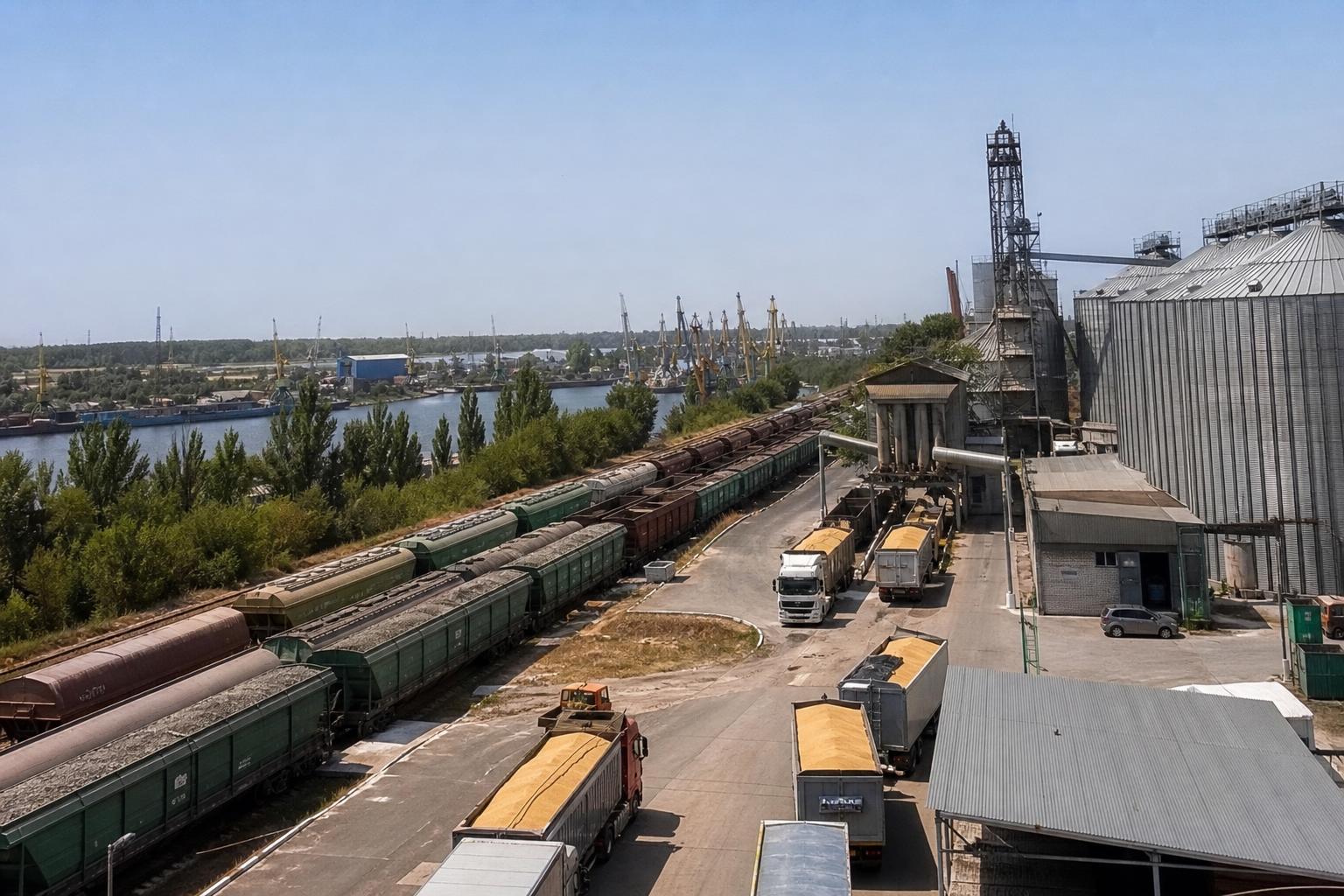
The Ukrainian grain market is entering a period when wheat prices are increasingly influenced not only by demand but also by the actual logistics routes available for export. Amidst risks in maritime logistics, some cargoes are seeking alternative channels, each with its own economic considerations.
For domestic sellers, this means a simple yet crucial point: the same batch of wheat can have varying commercial attractiveness depending on the elevator, loading station, access to railcars, and the ability to operate via the Danube or western routes.
Constanța: Route Exists, but Margins Are Under Pressure
According to analysts at UkrAgroConsult, exporting Ukrainian wheat through the Romanian port of Constanța can be profitable only with a significant increase in global prices. Currently, such growth is not observed.
The main issue is transportation costs. Part of Ukrainian grain is redirected to Constanța, but shallow waters on the Danube limit barge loading. When a vessel or barge cannot take full loads, the cost per ton increases.
A decline in domestic prices in Ukraine can partially offset higher logistics costs but does not fully resolve the issue. Therefore, sellers should carefully consider not only purchase prices but also the full chain of expenses up to the port or end buyer.
Shifting Export Flows Are Uneven
In the new 2026/27 season, analysts report that wheat exports through the Black Sea region are developing unevenly. In Ukraine, shipment rates are slowing down, although volumes still exceed last season's figures.
Meanwhile, Romanian and Bulgarian ports are increasing their pace but still lag behind last year's levels. It is expected that the growth in shipments in August may be more pronounced for the Constanța — Varna — Burgas route rather than traditional Ukrainian maritime channels.
For elevators, this emphasizes the importance of flexibility. Platforms that can quickly reorient batches between buyers, work with different delivery bases, and accumulate uniform volumes for specific logistics routes will have an advantage.
Rail Border with Poland: What Will Wagon Scanning Change
The State Customs Service is preparing to launch Ukraine’s first stationary system for scanning railway wagons and containers at the "Yahodyn" checkpoint on the border with Poland. The complex will conduct control without stopping trains.
The equipment has already been delivered to Ukraine, with construction work and infrastructure preparations ongoing. After installation, configuration, and testing, the system is expected to operate around the clock, generating X-ray images of wagons during train movement.
For grain logistics, this is important not as an immediate cost reduction but as a step toward more predictable control at the western border. If the technology operates reliably, cargo owners will find it easier to plan schedules and reduce delays associated with manual inspections.
Key Takeaways for Wheat Sellers and Buyers
- Calculate the price from elevator to buyer. High export prices do not guarantee margins if the route is expensive or unstable.
- Check the delivery basis. In proposals on AgroPost, it is advisable to clearly specify the shipment location, availability of rail, auto logistics, or Danube route.
- Do not overestimate alternative routes. Constanța can be suitable for some batches, but its economics depend on global prices and actual logistics costs.
- Monitor the western border. The launch of wagon scanning at Yahodyn may influence the organization of railway export shipments.
What this means for the market: In the near future, competition for wheat buyers will be driven not only by price but also by the quality of logistics proposals. Sellers who can confirm quick shipment, convenient basis, and transparent routes will have a stronger negotiating position. Buyers should compare offers not only by hryvnias per ton but also by the actual delivery cost to export or processing points.
Comments
No comments yetNo comments yet - be the first.