
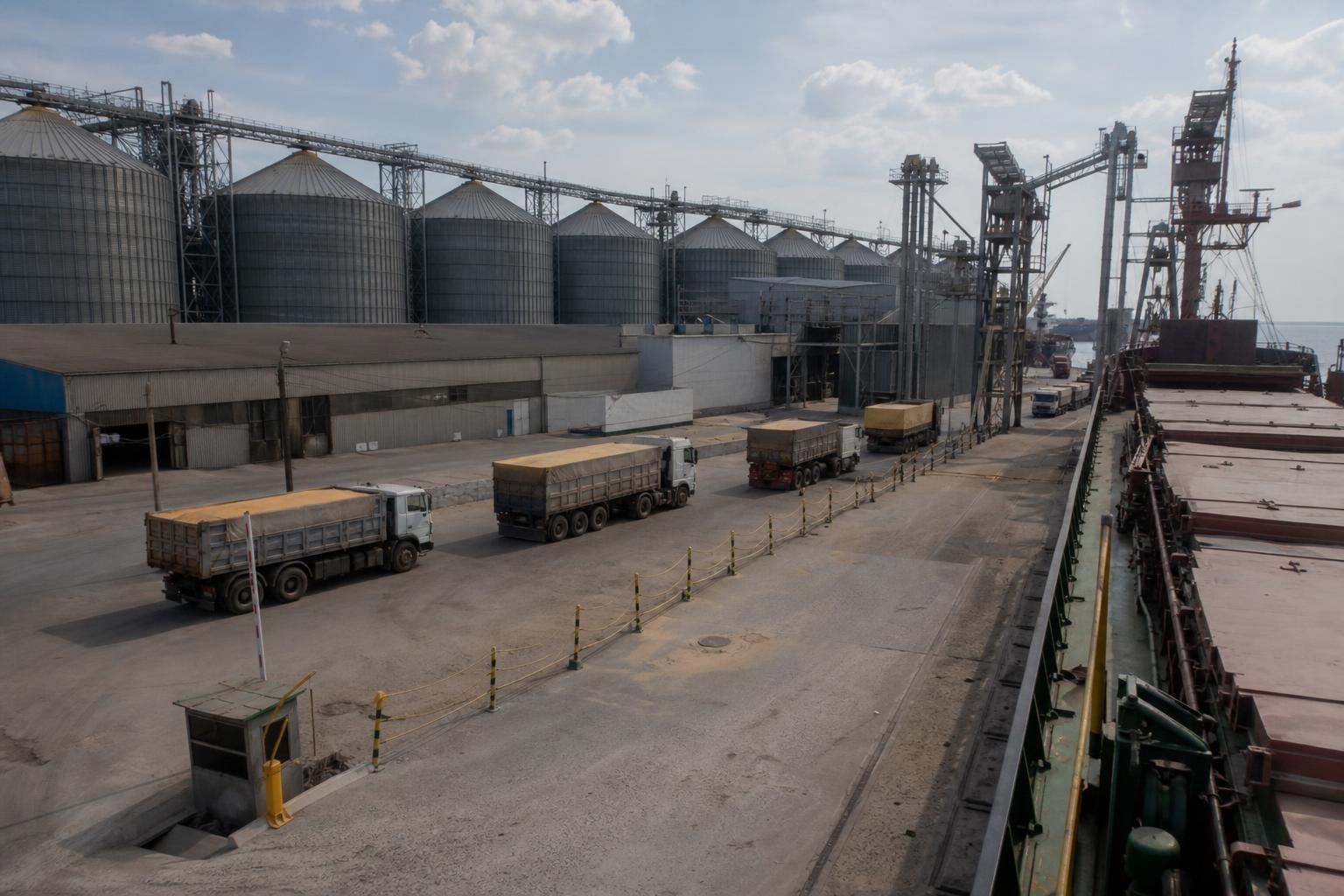
The Port of Constanța remains a key reference point for the Ukrainian grain market, but recent data show that the main cargo flow there is not Ukrainian transit, but Romanian exports.
According to data shared by AGRIColumn expert Caesar George, since July 1, approximately 8 million tons of cargo have passed through Constanța. Of these, about 7.3 million tons were of Romanian origin, around 550,000 tons were Ukrainian transit grain, and the rest were cargo from Moldova.
Why the share of Ukrainian grain in Constanța matters
For Ukrainian traders and farmers, these figures reflect not only transit volumes but also the level of competition for port infrastructure. Constanța actively handles its own Romanian grain, so Ukrainian shipments need to carefully calculate delivery costs, train or vehicle dispatch times, and potential delays.
It is also important to consider that the port has a storage capacity of about 2 million tons. Given the transshipment of around 8 million tons over just over two months, this indicates a high cargo turnover rate, but does not guarantee equal conditions for all directions and batches.
Romanian wheat intensifies competition
Romania has already exported over 3.5 million tons of wheat. According to the expert's estimate, if the Algeria tender for 500–550K tons of wheat is fulfilled, Romanian exports could approach 4 million tons.
An additional estimate suggests that Romania could export up to 9 million tons of wheat by the end of the season. For the Ukrainian market, this means buyers see an active alternative offer near Ukraine along the Black Sea and Mediterranean routes.
Under these conditions, Ukrainian grain sellers should not only monitor exchange rates but also compare net prices after logistics. Even with attractive port prices, margins can decrease due to high transportation costs, delays, or quality requirements.
Price benchmarks for Constanța
The quoted prices for Romanian wheat FOB Constanța ranged from $287 to $290 per ton. On the physical market, offers for wheat delivered to the port were around €235/ton, and for grain with 12.5% protein — up to €240/ton.
The expert does not expect significant further price increases, as countries from the Southern Hemisphere with large grain volumes are entering the global market. For Ukrainian sellers, this is an argument not to delay negotiations waiting for a sharp price rise, but to focus on securing deals now.
Practical conclusions for sellers and buyers on AgroPost
- Grain sellers should separately calculate the elevator price, delivery to the border crossing or port, and the final net margin.
- Elevator operators should emphasize available shipment routes, processing speed, and the ability to form export batches in their announcements.
- Buyers should compare Ukrainian offers with Romanian ones not only by price but also by delivery times, quality, and logistics stability.
- Traders need to closely monitor Constanța cargo volumes and alternative routes to avoid overoptimistic contractual deadlines.
What this means for the market: Constanța remains an active route for Ukrainian grain, but current volumes highlight strong competition from Romanian exports. For AgroPost participants, the key advantage is not just the presence of grain but transparent logistics: where the batch is located, how quickly it can be shipped, and the actual price after delivery.
Comments
No comments yetNo comments yet - be the first.