
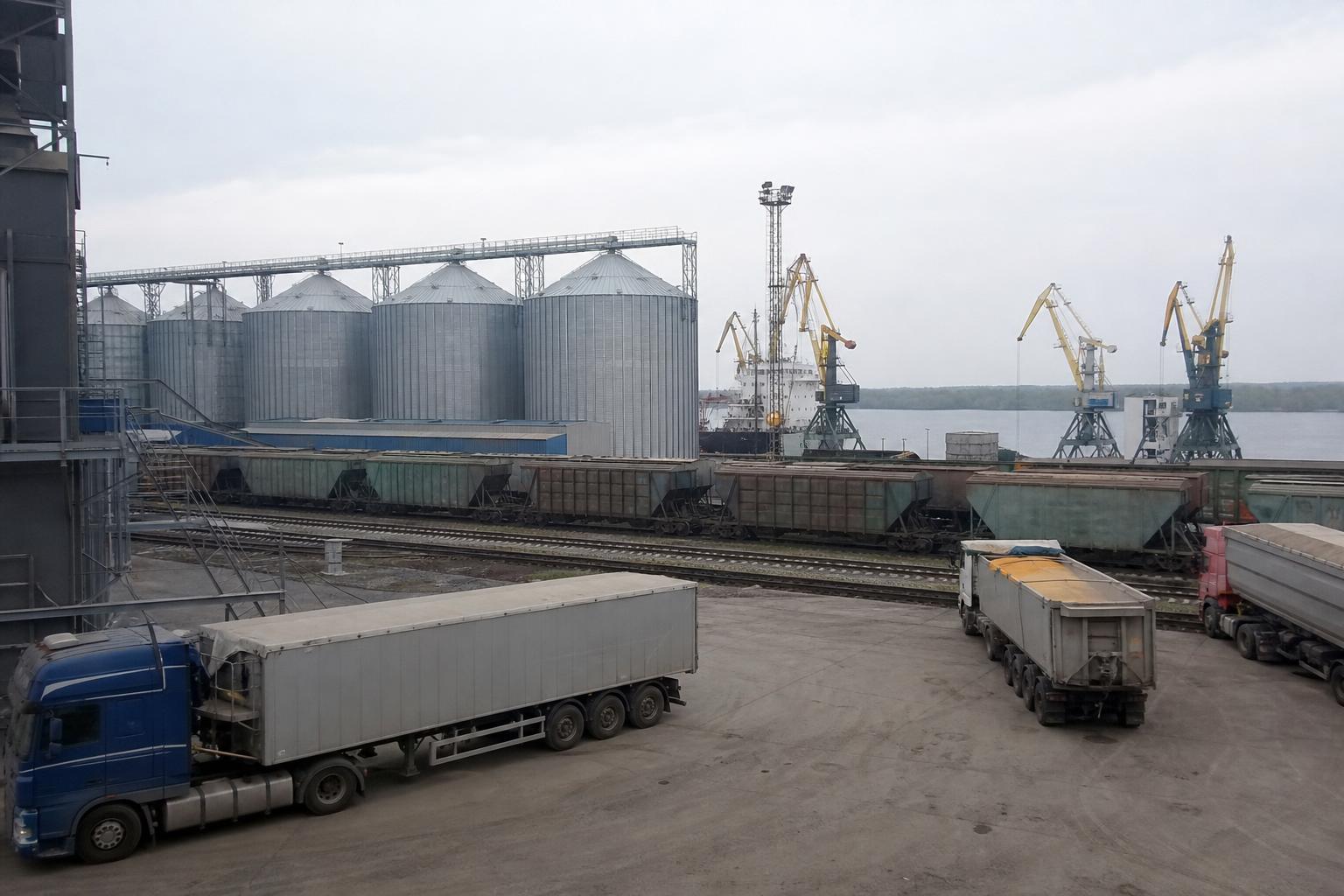
Ukrainian agri-export in August remains dependent on route availability and transportation costs. According to data announced by the Ministry of Agrarian Policy and Food, from August 1 to 18, 900,000 tons of agricultural products were exported.
This volume is estimated at 31% of the potential export capacity under free access to the ports of Greater Odessa. The most significant pressure is felt in the grain segment, where high logistics costs quickly erode profit margins.
Grain: the most sensitive to transportation costs
During this period, Ukraine exported 522,000 tons of grains. This is only 20% of the volume that, according to the ministry’s estimates, could be shipped under free logistics conditions.
The main issue for grain is the economics of delivery. When the route becomes more expensive, it becomes harder for sellers to maintain acceptable purchase prices at farms, and for buyers to secure competitive final export prices.
For the market, this means that grain proposals must be as specific as possible: loading point, available transport modes, preferred basis, acceptable shipment deadlines, and readiness for combined logistics.
Oilseeds and processing appear more resilient
From August 1 to 18, Ukraine exported 163,000 tons of oilseeds, 128,000 tons of oils, and 86,000 tons of meal. According to Taras Vysotskyi, alternative routes may better serve the oilseed segment and processed products.
The reason is different product economics: with higher unit costs, additional logistics components are less damaging to margins than in bulk grain shipments. The report also mentions a logistics surcharge of about $50 per ton, which still allows for positive or break-even economics for oilseed processing products.
This gives oilseed and processed product sellers more room for route negotiations. However, buyers should still fix not only the product price but also delivery conditions, as logistics currently determine the real competitiveness of deals.
Danube route: infrastructure development in the region
In Romania, modernization and expansion of the Luminița port on the Danube-Black Sea Canal have been completed. The project cost was 120 million lei, approximately €24 million including VAT.
The port area has been transformed into a terminal with berths and infrastructure for water and electricity supply. According to the Constanța Shipping Canal Authority, by the third year of operation, the port aims to gradually reach a throughput of 300,000 tons of cargo annually.
For Ukraine’s agri-market, this is not an immediate solution to logistical constraints, as administrative procedures and port area auctions are still ahead. Nonetheless, the development of port infrastructure in the Danube-Black Sea region remains an important signal for participants seeking alternative routes.
What sellers and buyers should consider on AgroPost
- Grain requires precise logistics planning. Without clear delivery costs, the listing price can quickly become outdated.
- Oilseeds and processed products have a better margin buffer. But route and shipment deadlines still need confirmation before finalizing deals.
- Combined routes are becoming standard. Road, rail, river, and port segments should be planned as a unified chain.
- Clarifying delivery basis improves lead quality. For AgroPost listings, it’s advisable to specify FCA, DAP, CPT, or other agreed conditions if known.
What this means for the market. The nearest focus of agricultural logistics is not only finding transport but also maintaining deal economics. Grain remains most vulnerable to high-cost routes, while oilseeds and processing products have better chances of passing through alternative channels. For AgroPost participants, proposals that clearly specify route, basis, and readiness to ship alongside price will have a practical advantage.
Comments
No comments yetNo comments yet - be the first.